Why it matters
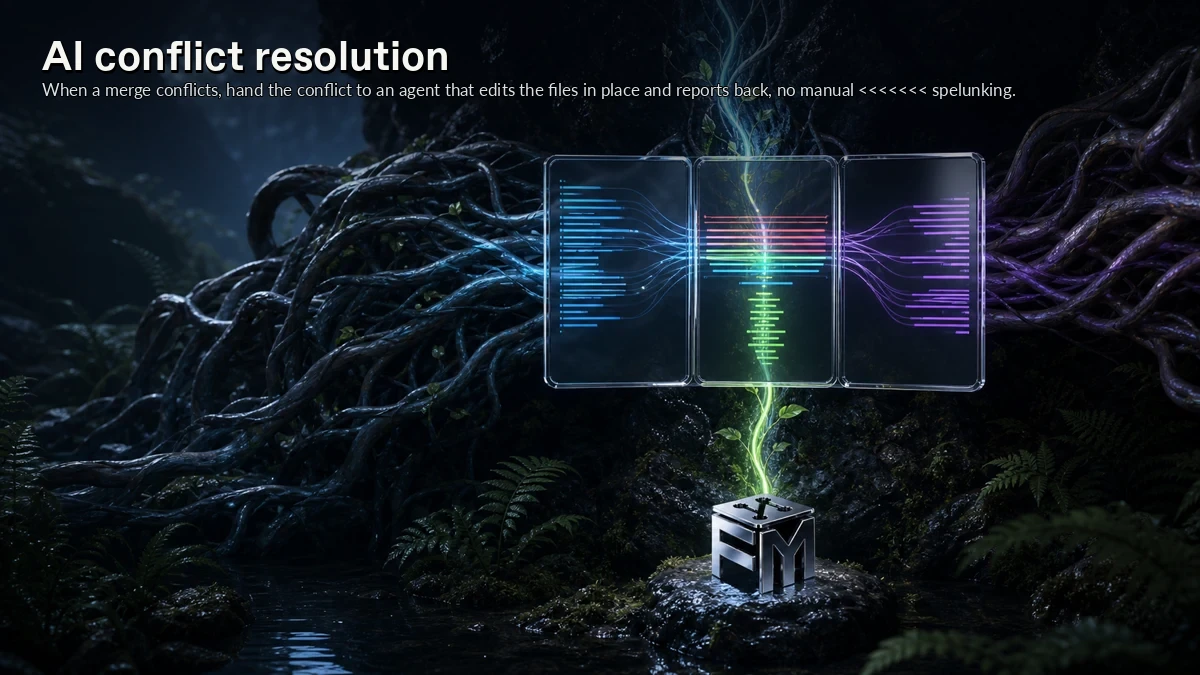
AI conflict resolution gives ForkMesh a concrete mechanism for agent-assisted conflict edits applied directly to the conflicted files. When a merge conflicts, hand the conflict to an agent that edits the files in place and reports back, no manual <<<<<<< spelunking.
Review becomes risky when merge state, discussion, and final application are trapped in a central service. In ForkMesh, AI conflict resolution addresses that need at the feature level, keeping the behavior close to the repository instead of buried in a detached hosted layer.
How ForkMesh handles it
ForkMesh handles AI conflict resolution through the same split it uses across the product: ForkMesh derives diffs from live branches or signed patches, checks mergeability against the live base, and records review activity as portable data.
The behavior is intentionally narrow: When a merge conflicts, hand the conflict to an agent that edits the files in place and reports back, no manual <<<<<<< spelunking. Maintainers can verify what changed, who proposed it, and whether it will merge before touching the base branch.
Where it fits
Use AI conflict resolution when contributors need familiar review mechanics without making one hosted PR database the source of truth.
It pairs with the rest of Pull requests & review because AI conflict resolution keeps agent-assisted conflict edits applied directly to the conflicted files connected to the repository, its signatures, and the nodes that serve it.