Introducing ForkMesh: code beyond a single host
Independent mirrors, owner-held keys, private collaboration, and transparent community incentives.
Blog
Every ForkMesh feature now has a short technical post, generated from the live feature catalog and paired with its own visual.
Actively mirrored repositories live on independent nodes and refresh while configured synchronization is healthy; external stubs stay labeled.
Distributed hosting
Actively mirrored repositories live on independent nodes and refresh while configured synchronization is healthy; external stubs stay labeled.
The Worker stores signed discovery and health metadata, not Git packfiles. Repository bytes stream from selected independent origins over HTTPS.
Git Smart HTTP keeps the public ForkMesh URL while the Worker selects a signed, healthy, integrity-verified mirror behind it.
Git packs stream over ordinary HTTPS from a selected mirror and are never retained as Worker or D1 repository storage.
When an eligible, healthy, integrity-matching mirror exists, ForkMesh can fail over behind the same public URL and keep a clone exchange sticky.
Fallback serving is checked against integrity pins attested by the source of truth, so a mirror can prove it's handing you the same history the author published.
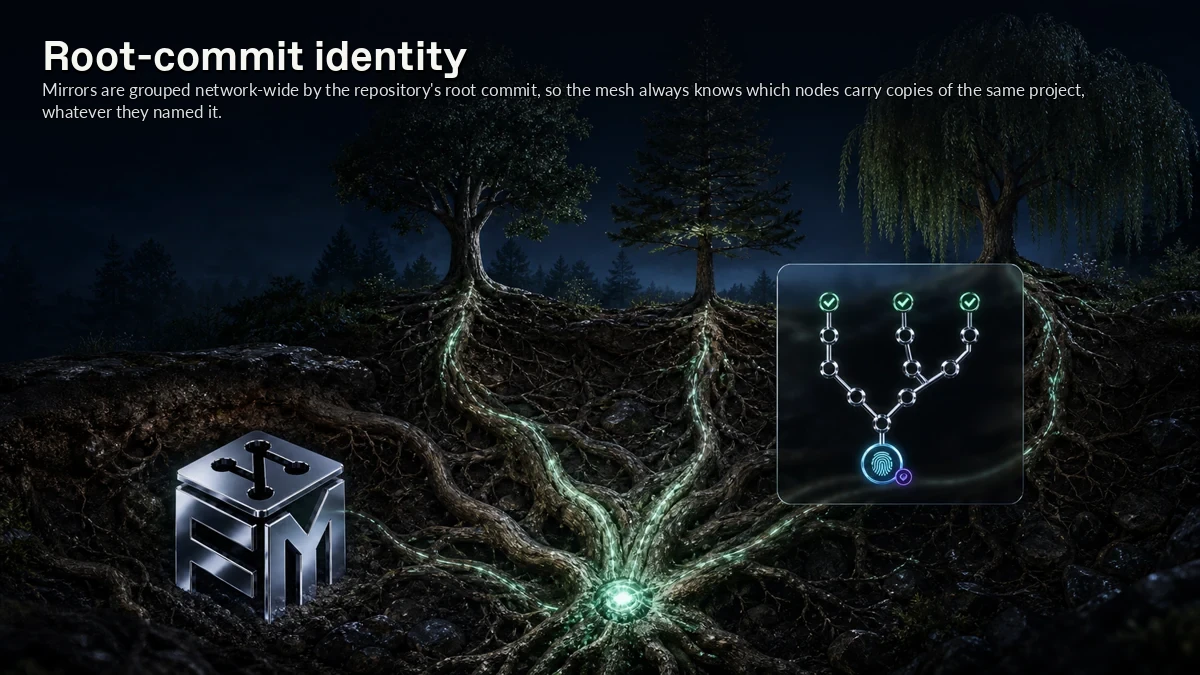
Reported mirrors can be grouped by a signed repository root commit, independent of the local name each host chose.
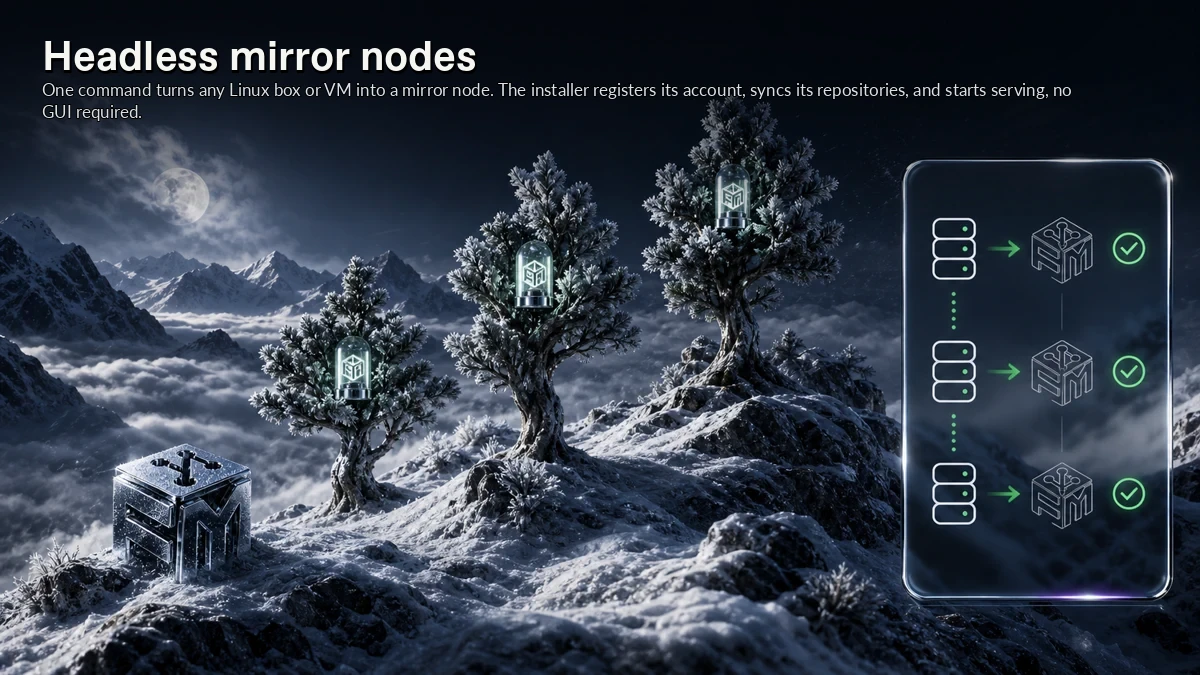
One command turns any Linux box or VM into a mirror node. The installer registers its account, syncs its repositories, and starts serving, no GUI required.
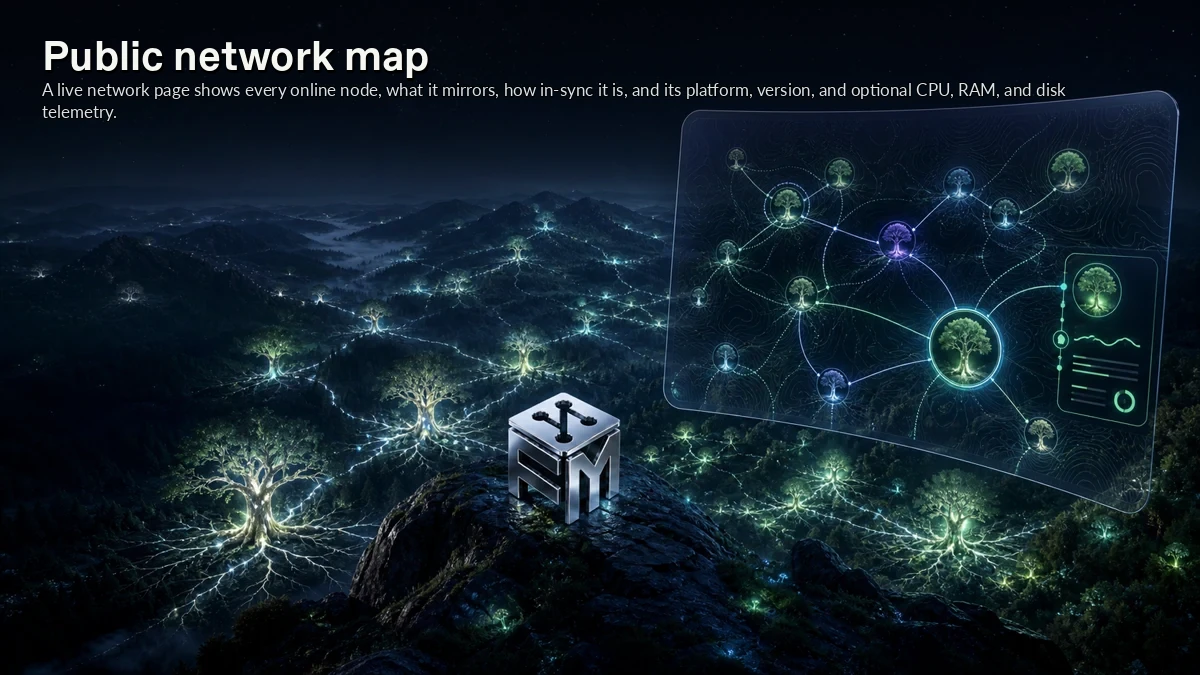
The network page shows recently verified public nodes, generalized mirror health, and operator-approved optional telemetry.
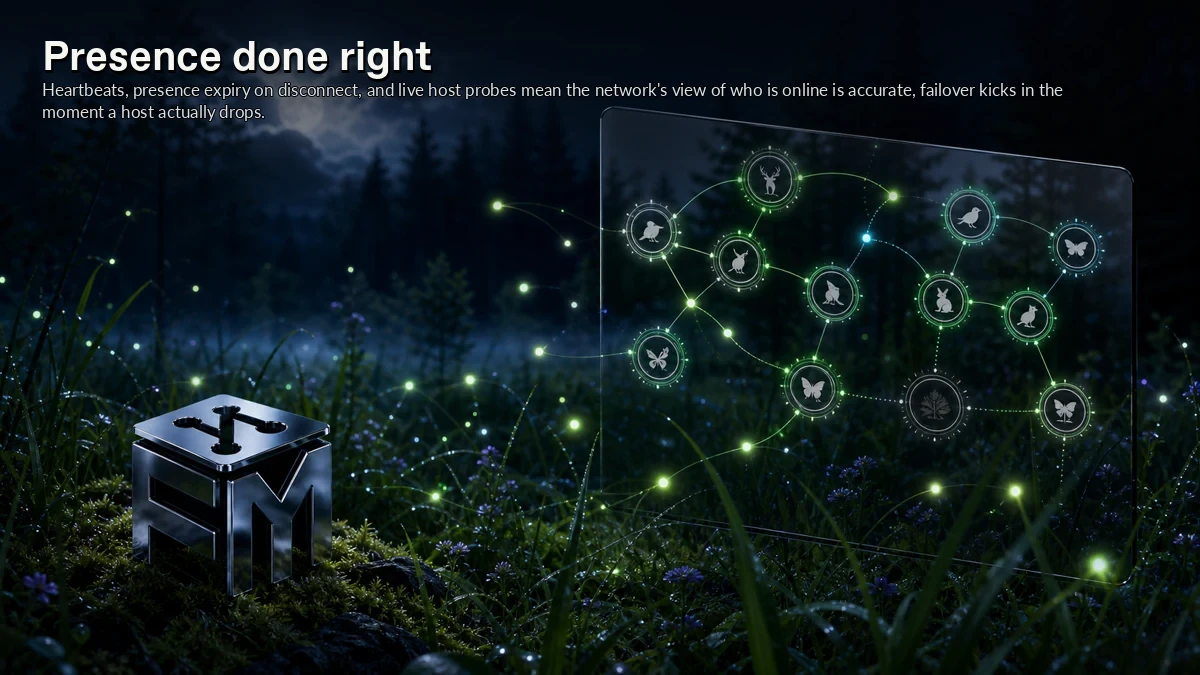
Bounded heartbeats, expiry, and live probes reduce stale presence while allowing the deliberately minimal real-time layer to lag.
Signed collaboration
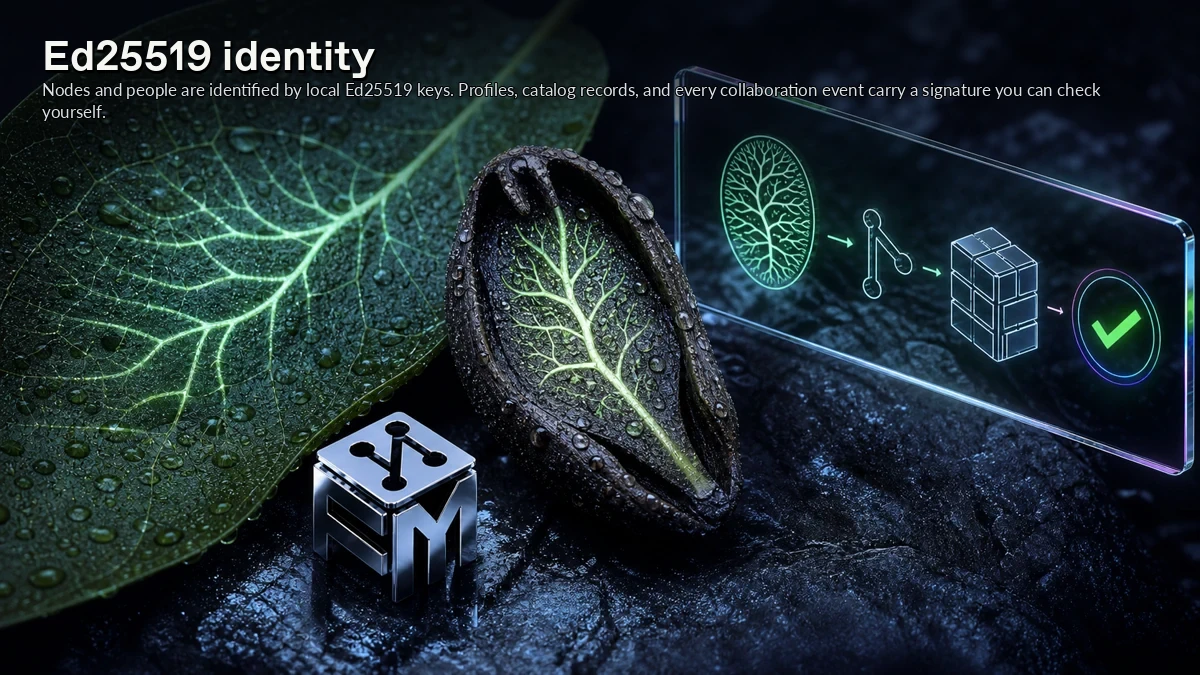
Nodes and people are identified by local Ed25519 keys. Profiles, catalog records, and every collaboration event carry a signature you can check yourself.
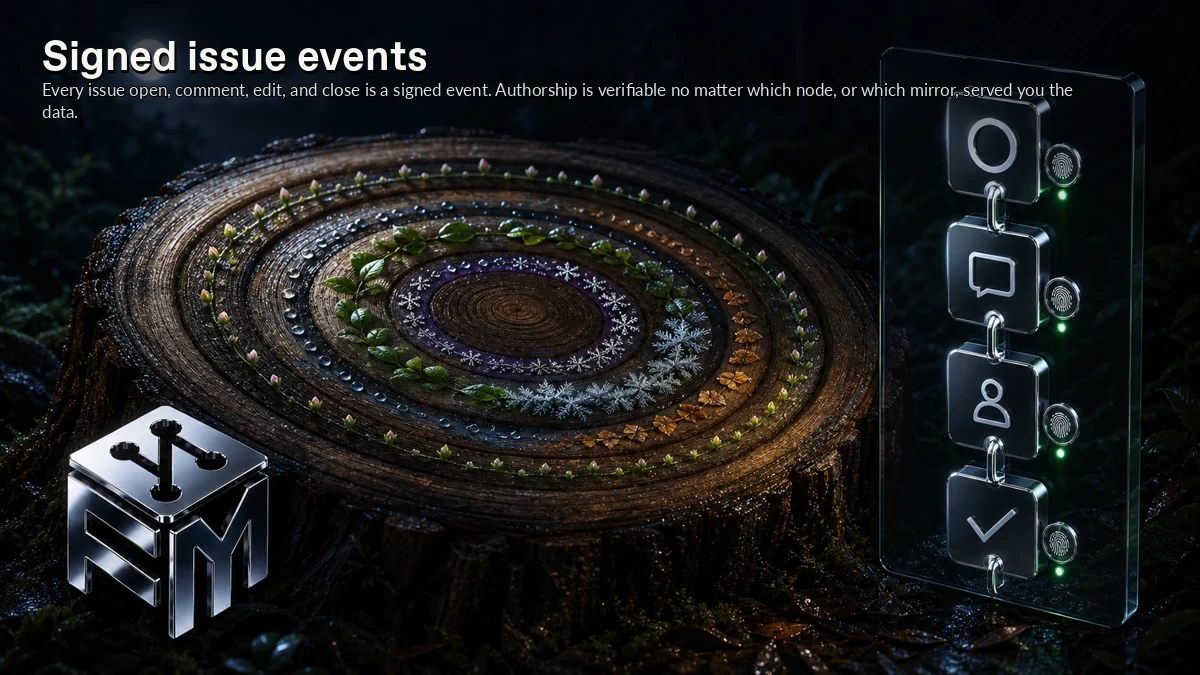
Every issue open, comment, edit, and close is a signed event. Authorship is verifiable no matter which node, or which mirror, served you the data.
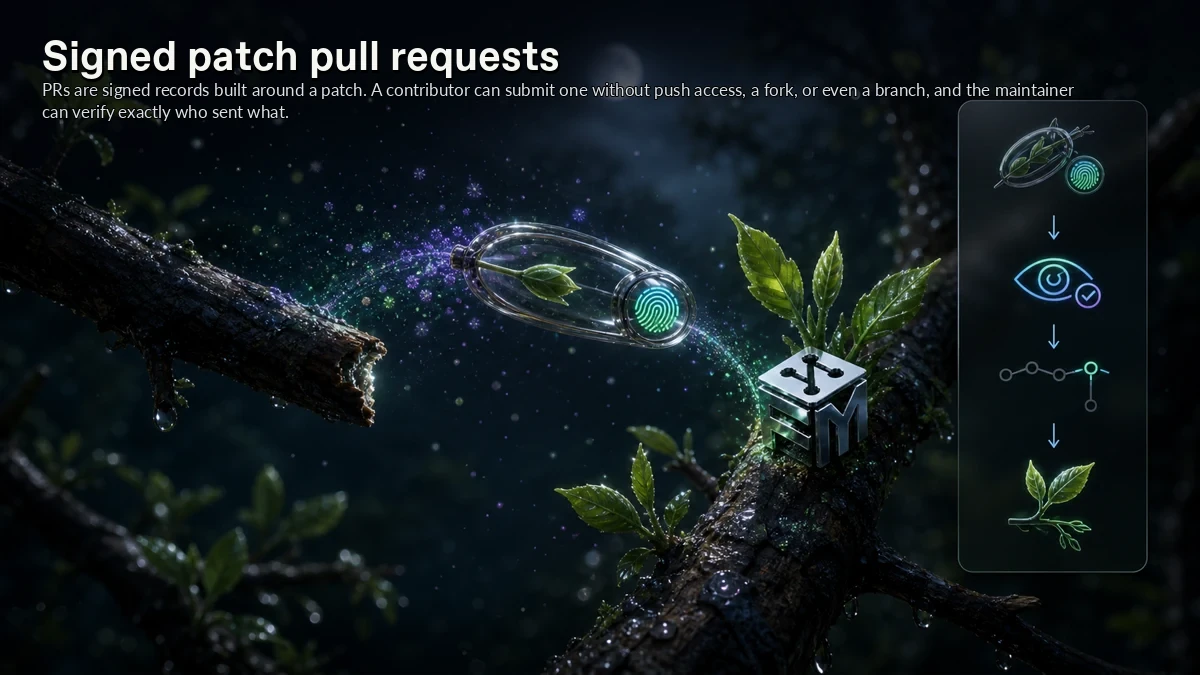
PRs are signed patch submissions. Anyone can propose a change to any repository in the mesh and the maintainer can verify exactly who sent what.
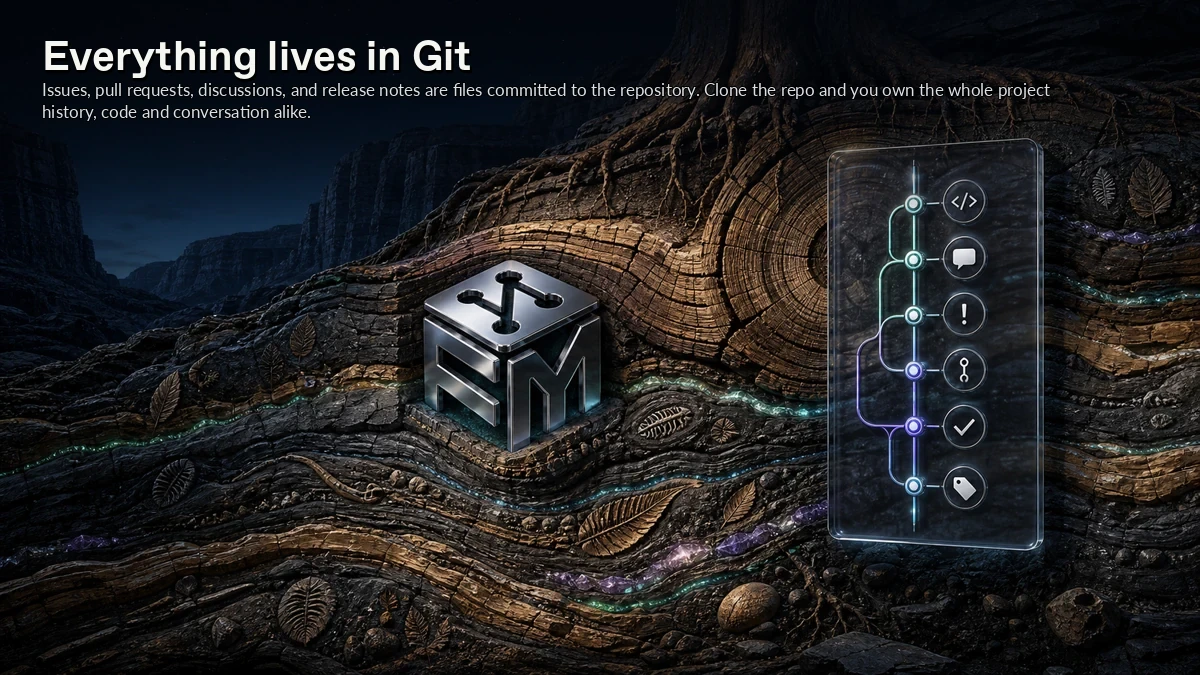
Issues, pull requests, discussions, and release notes are files committed to the repository. Clone the repo and you own the whole project history, code and conversation alike.
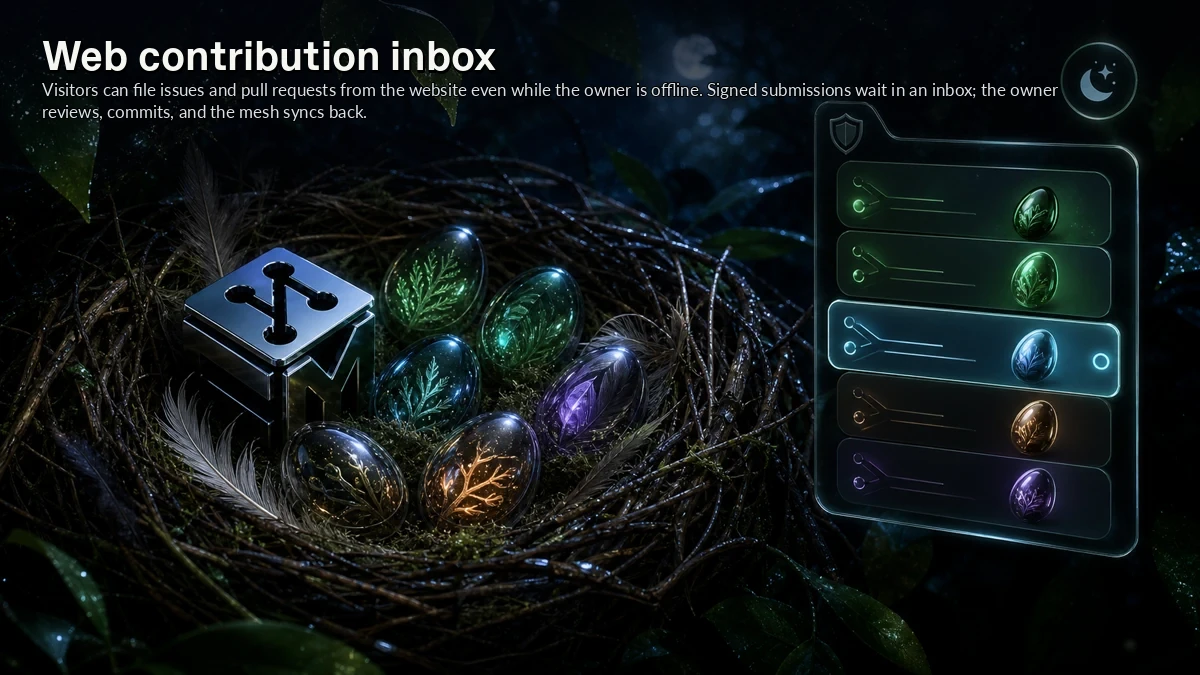
Visitors can file issues and pull requests from the website even while the owner is offline. Signed submissions wait in an inbox; the owner reviews, commits, and the mesh syncs back.
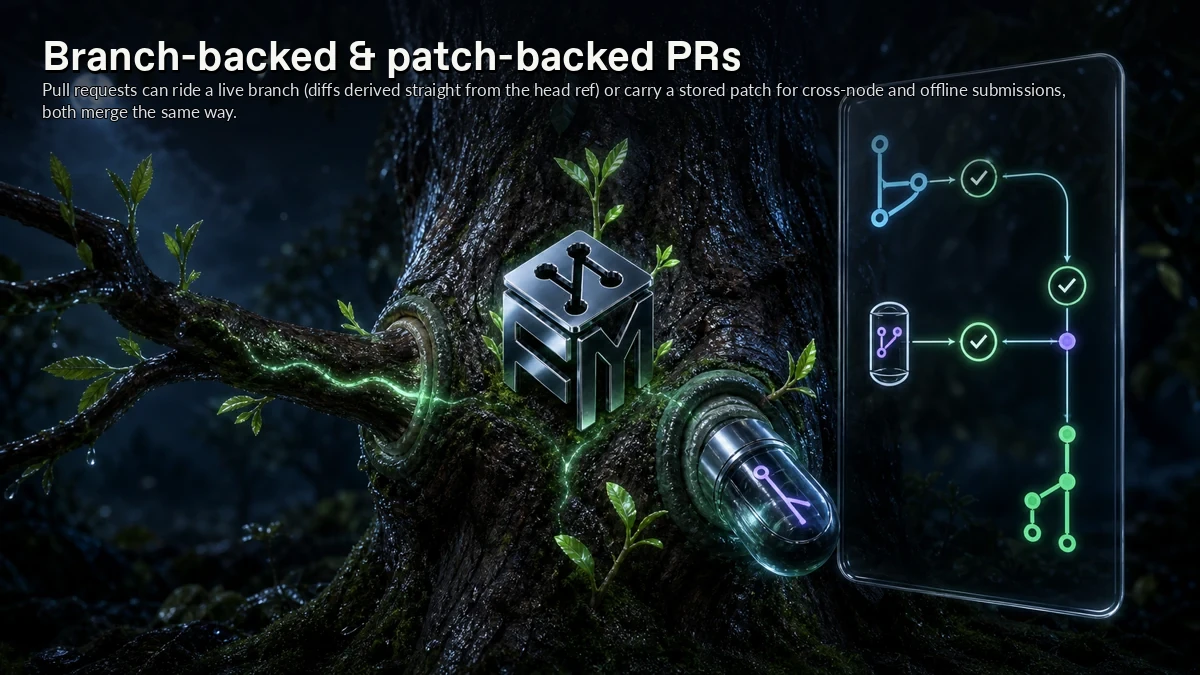
Pull requests can ride a live branch (diffs derived straight from the head ref) or carry a stored patch for cross-node and offline submissions, both merge the same way.
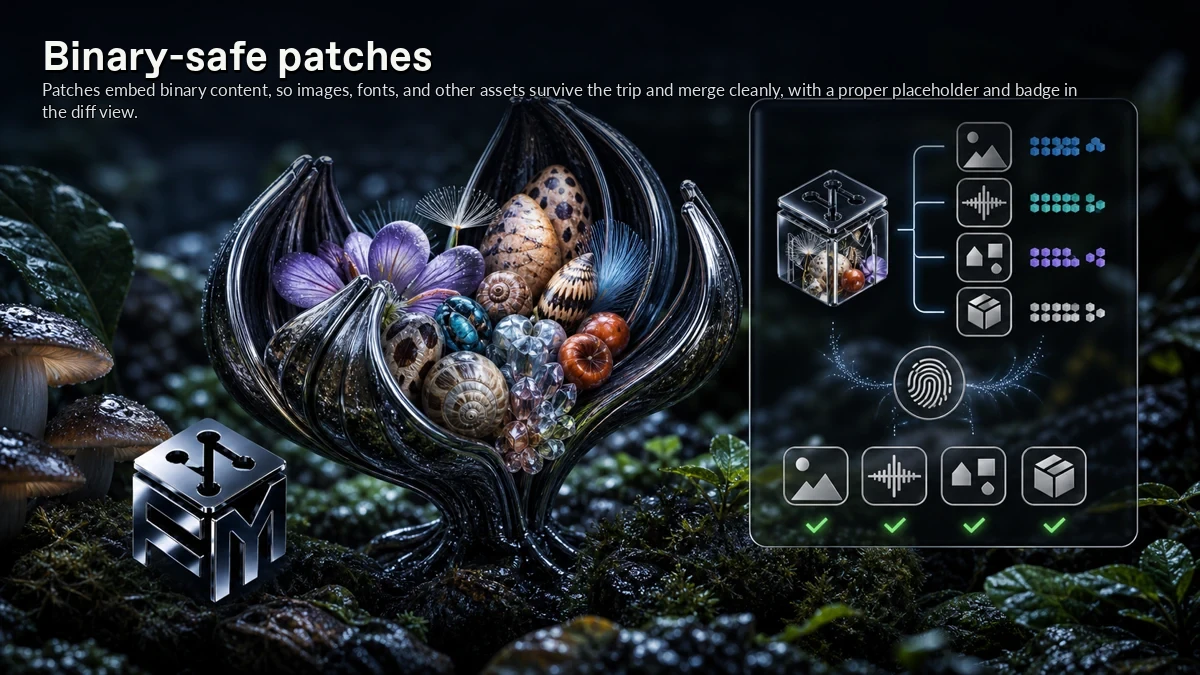
Patches embed binary content, so images, fonts, and other assets survive the trip and merge cleanly, with a proper placeholder and badge in the diff view.
Issues & planning
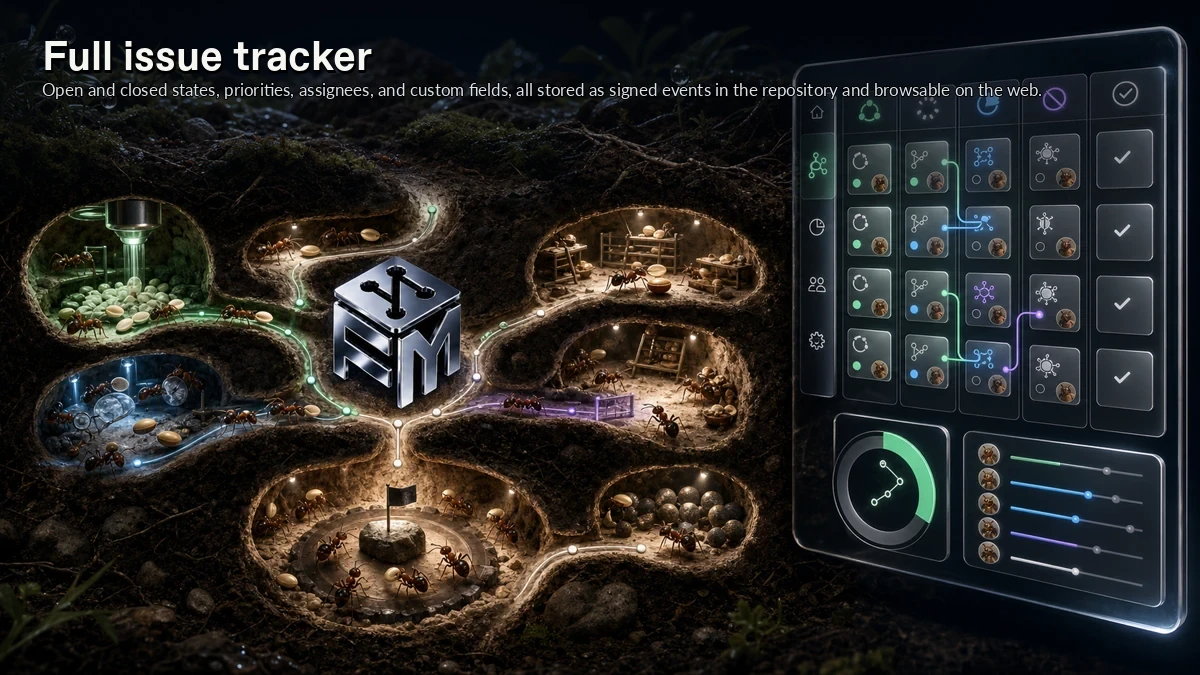
Open and closed states, priorities, assignees, and custom fields, all stored as signed events in the repository and browsable on the web.
Drag issues across columns to plan work visually, right inside the desktop app.
Group issues into milestones and watch live progress bars fill as work lands.
Built-in burnup charts show scope and completion over time, so you can see a release converging (or not) at a glance.
A prompt-style quick-add box captures an issue in one line, and can hand it straight to an AI agent as it's filed.
Merge a pull request and its linked issue closes itself. One checkbox syncs the merge straight to main.
Pull requests & review
Syntax-aware diffs with side-by-side image comparison and clear badges for binary changes, in the app and on the web.
Every PR is checked with a true three-way merge against the live base branch, so "can merge" means it will actually merge.
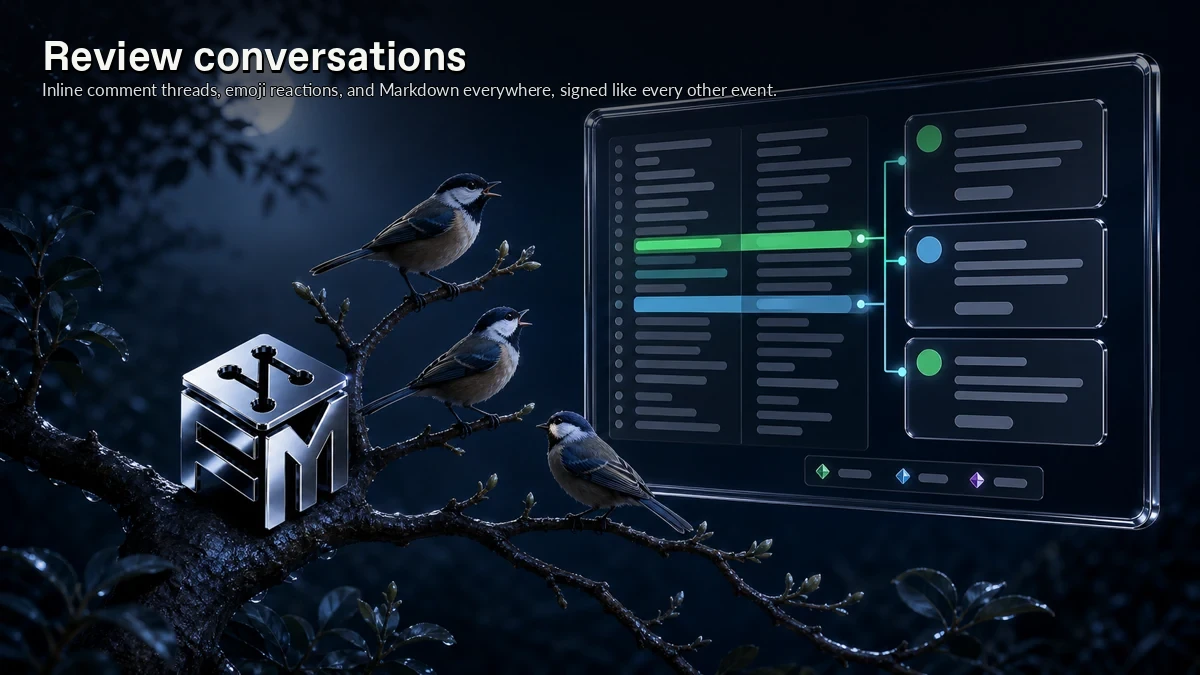
Inline comment threads, emoji reactions, and Markdown everywhere, signed like every other event.
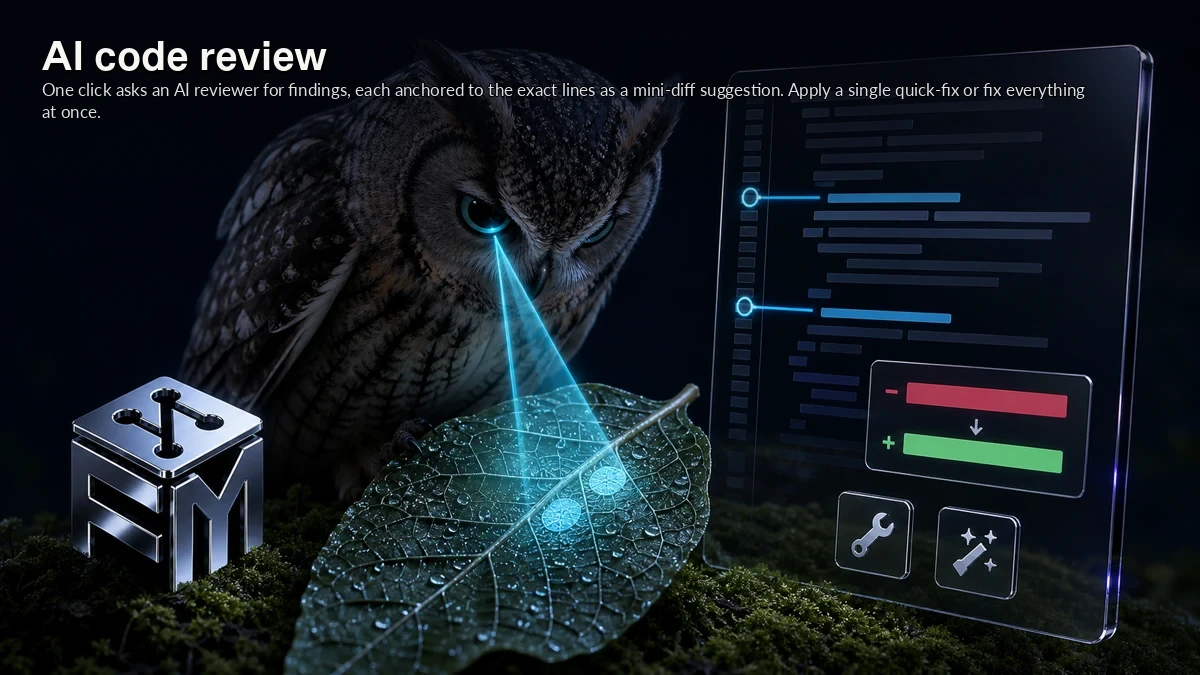
One click asks an AI reviewer for findings, each anchored to the exact lines as a mini-diff suggestion. Apply a single quick-fix or fix everything at once.
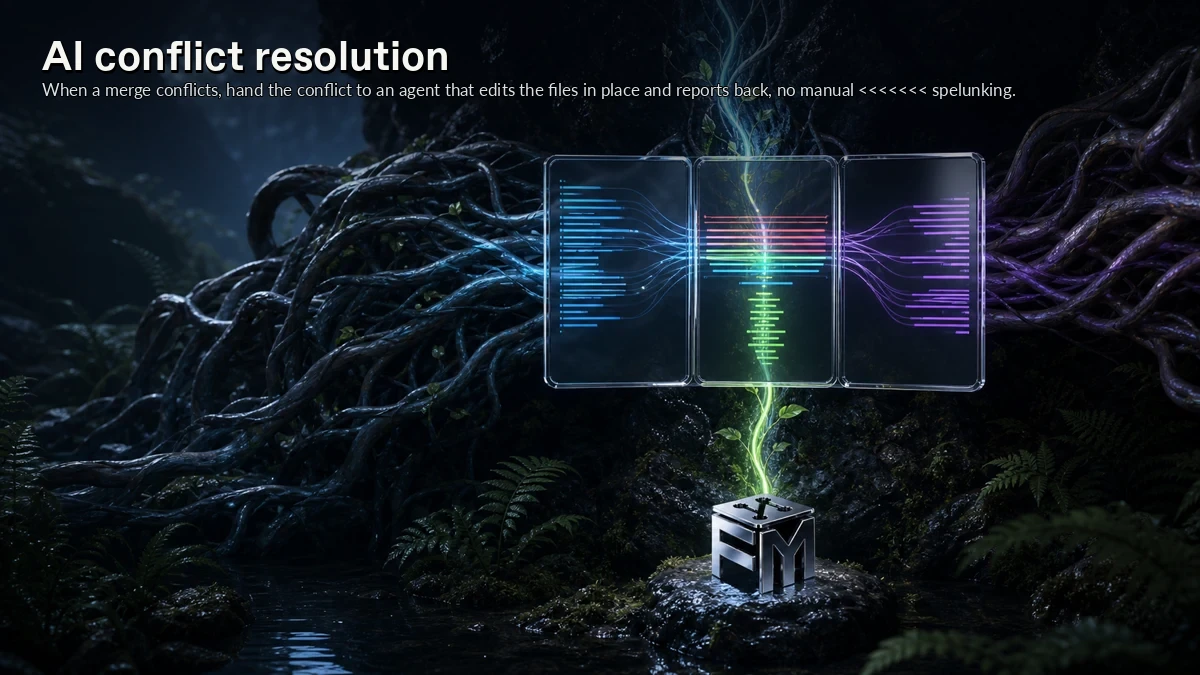
When a merge conflicts, hand the conflict to an agent that edits the files in place and reports back, no manual <<<<<<< spelunking.
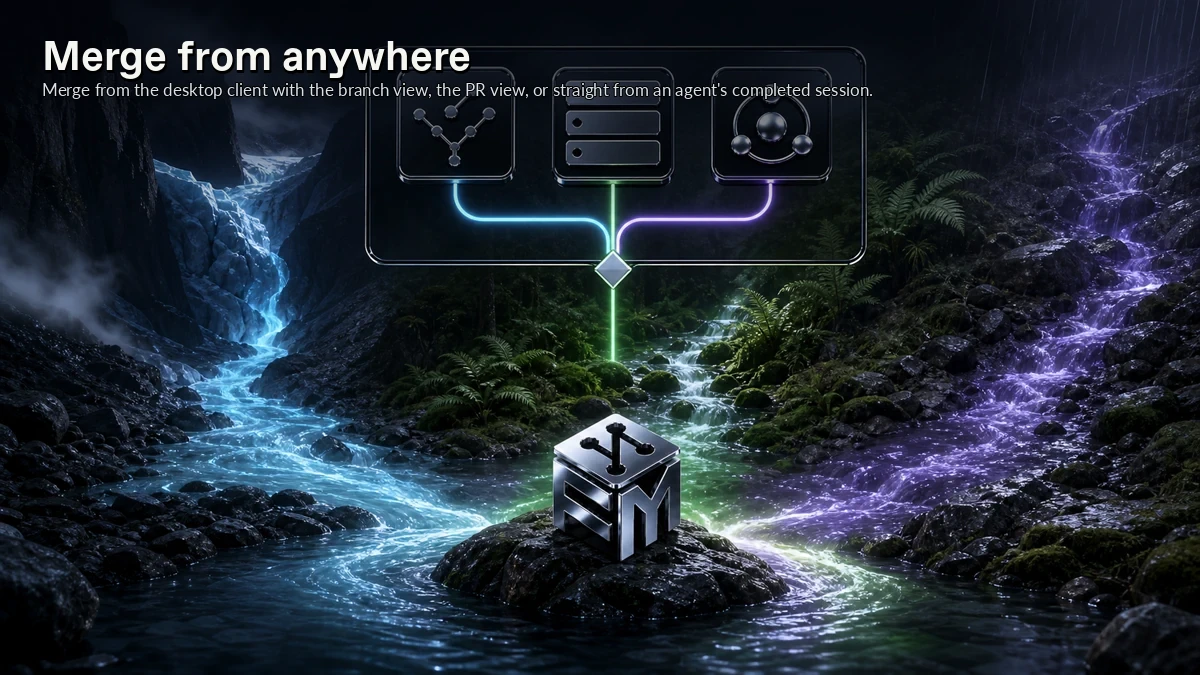
Merge from the desktop client with the branch view, the PR view, or straight from an agent's completed session.
AI agents
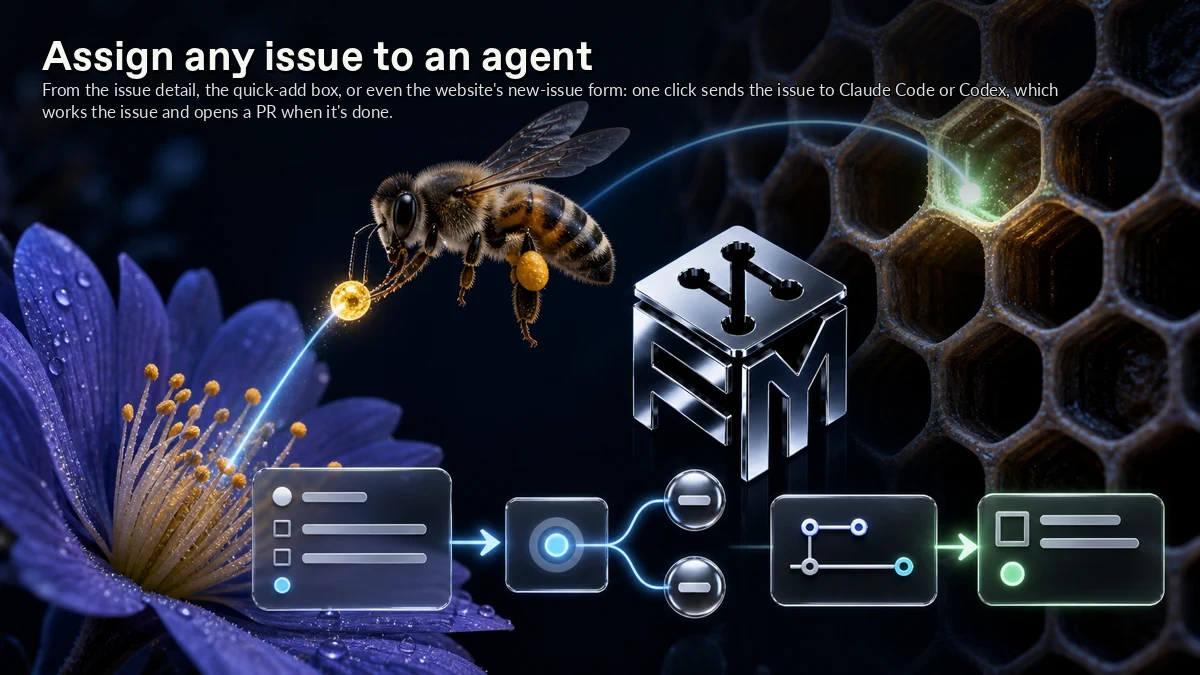
From the issue detail, the quick-add box, or even the website's new-issue form: one click sends the issue to Claude Code or Codex, which works the issue and opens a PR when it's done.
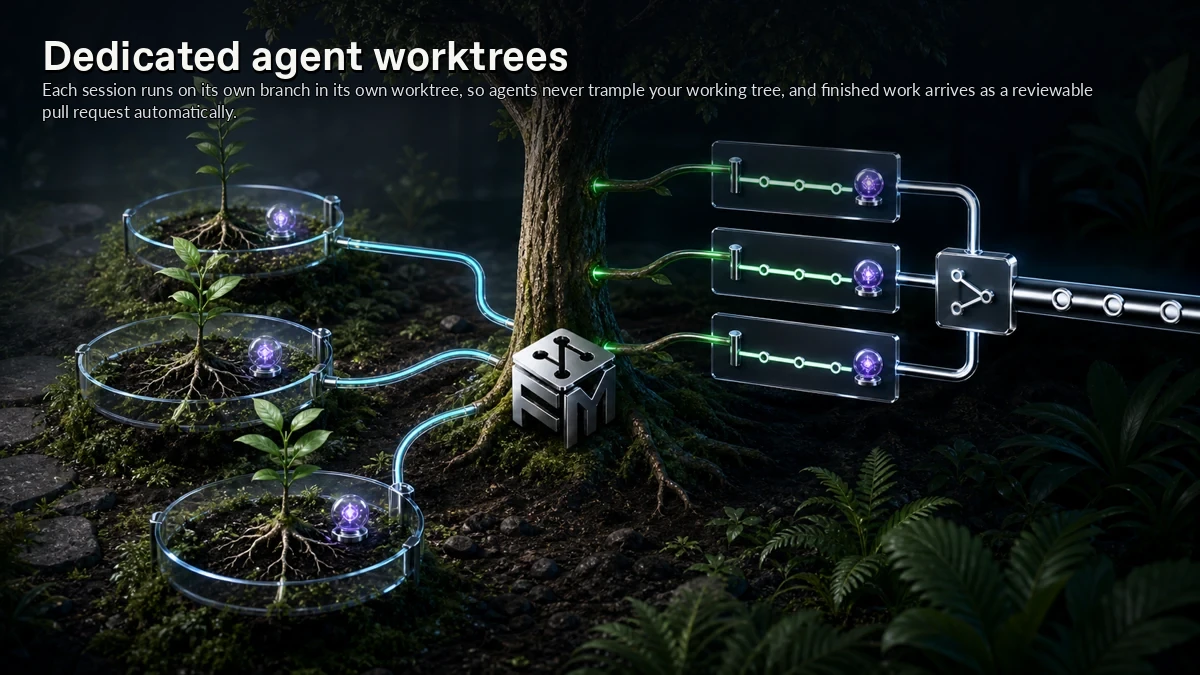
Each session runs on its own branch in its own worktree, so agents never trample your working tree, and finished work arrives as a reviewable pull request automatically.
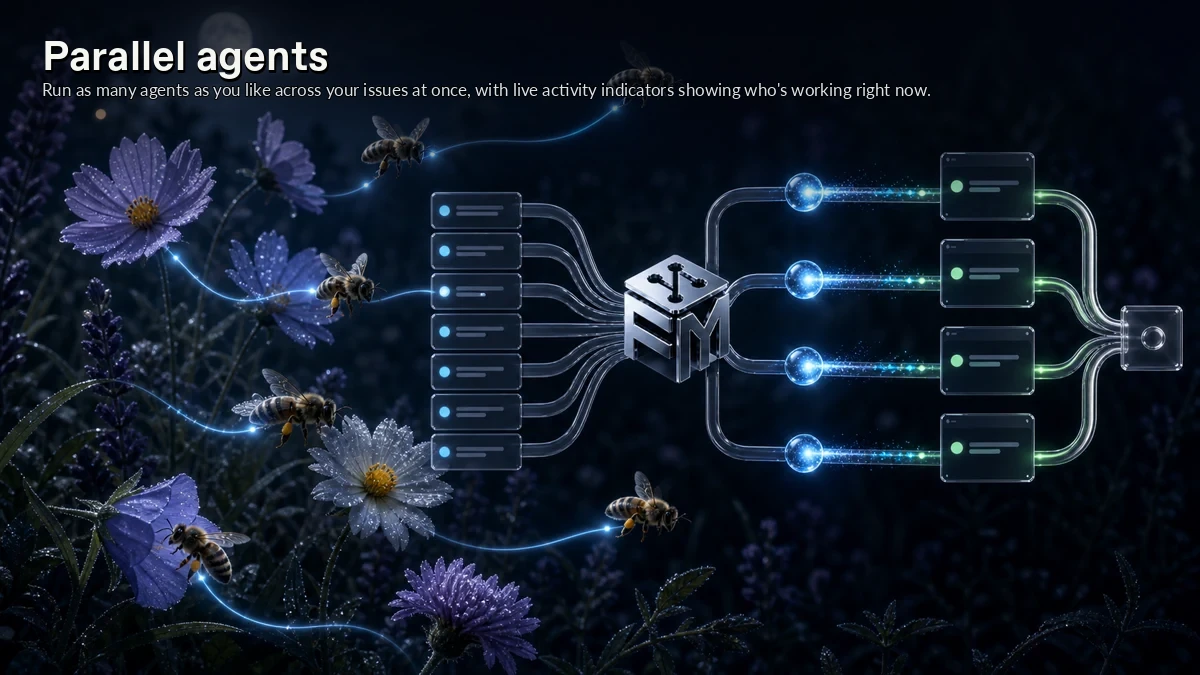
Run as many agents as you like across your issues at once, with live activity indicators showing who's working right now.
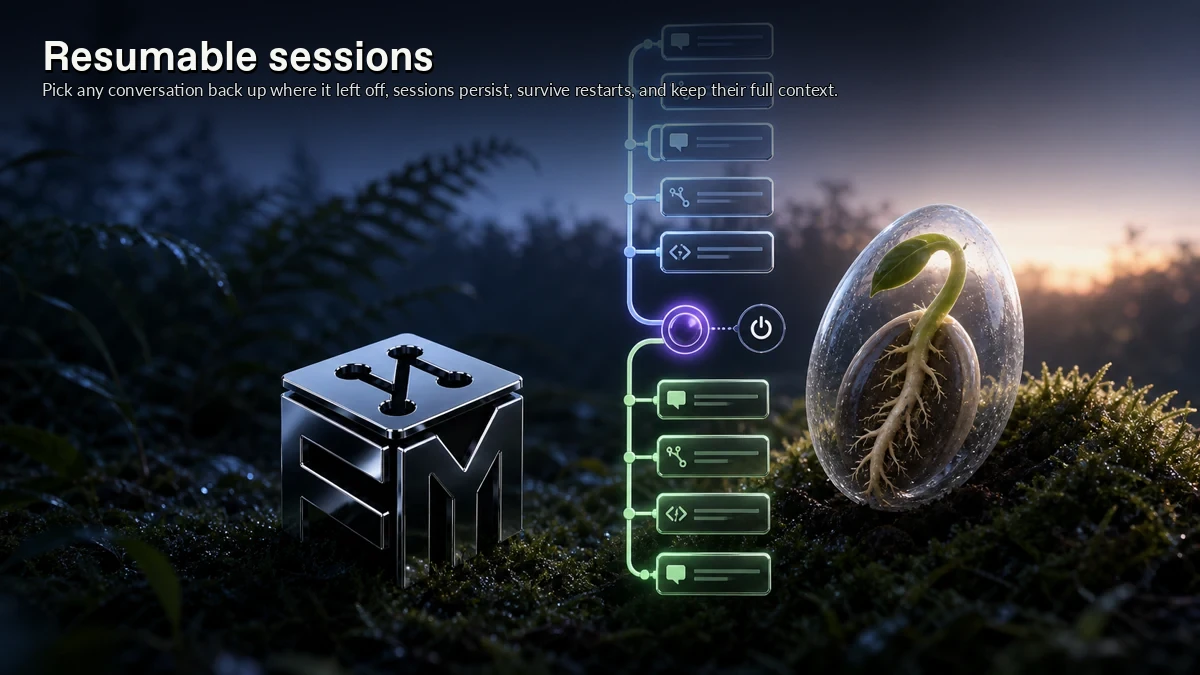
Pick any conversation back up where it left off, sessions persist, survive restarts, and keep their full context.
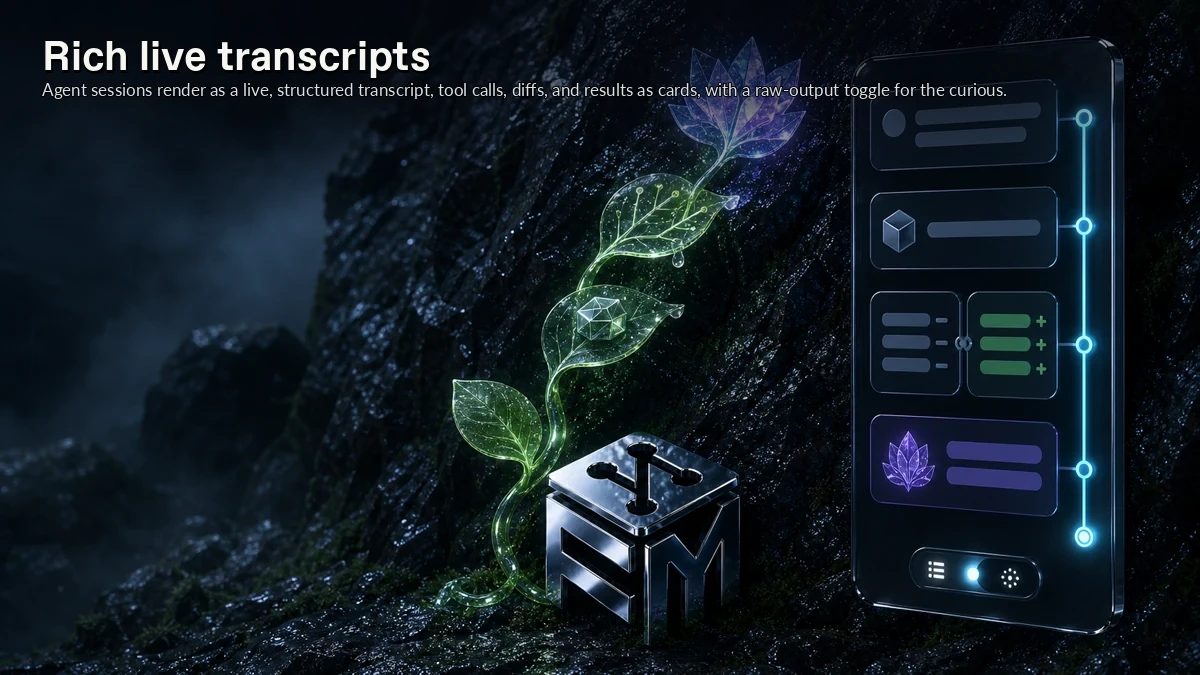
Agent sessions render as a live, structured transcript, tool calls, diffs, and results as cards, with a raw-output toggle for the curious.
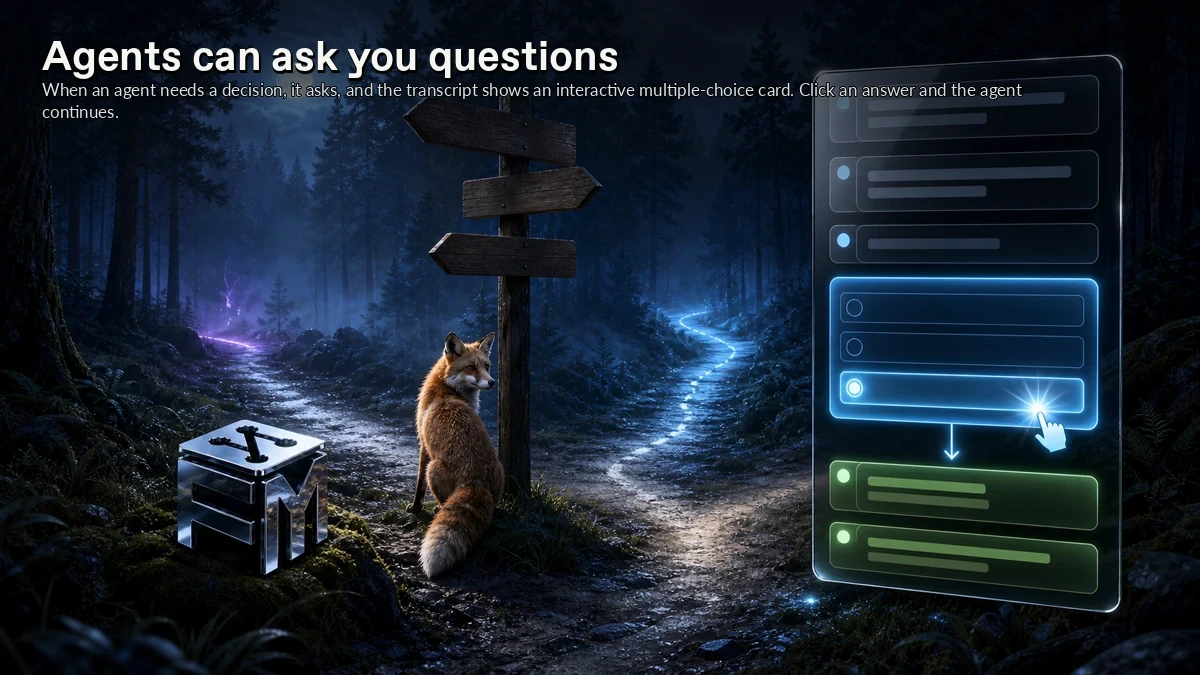
When an agent needs a decision, it asks, and the transcript shows an interactive multiple-choice card. Click an answer and the agent continues.
A real VT100 terminal widget renders agent and workflow output with full color and emoji, not a flat log viewer.
The desktop app speaks the Claude Code IDE protocol: run claude in a repo and it connects to ForkMesh for diff views and selection context, just like an editor extension.
See your Claude 5-hour and weekly usage right in the app, updated every minute, so you always know how much agent runway is left.
Replace the built-in agent workflow with your own preamble in Settings, your rules govern every session.
CI, releases & distribution
Real workflows run on push, with the latest live log always one click away and full runs rendered in the native terminal.
Workflow outputs are collected per run and browsable from the repository's Artifacts tab.
Browse tags, mark the current release, and cut new releases in seconds, release notes live in the repository like everything else.
Release binaries live in a content-addressed store keyed by SHA-256, keeping the Git history lean while downloads stay verifiable end-to-end.
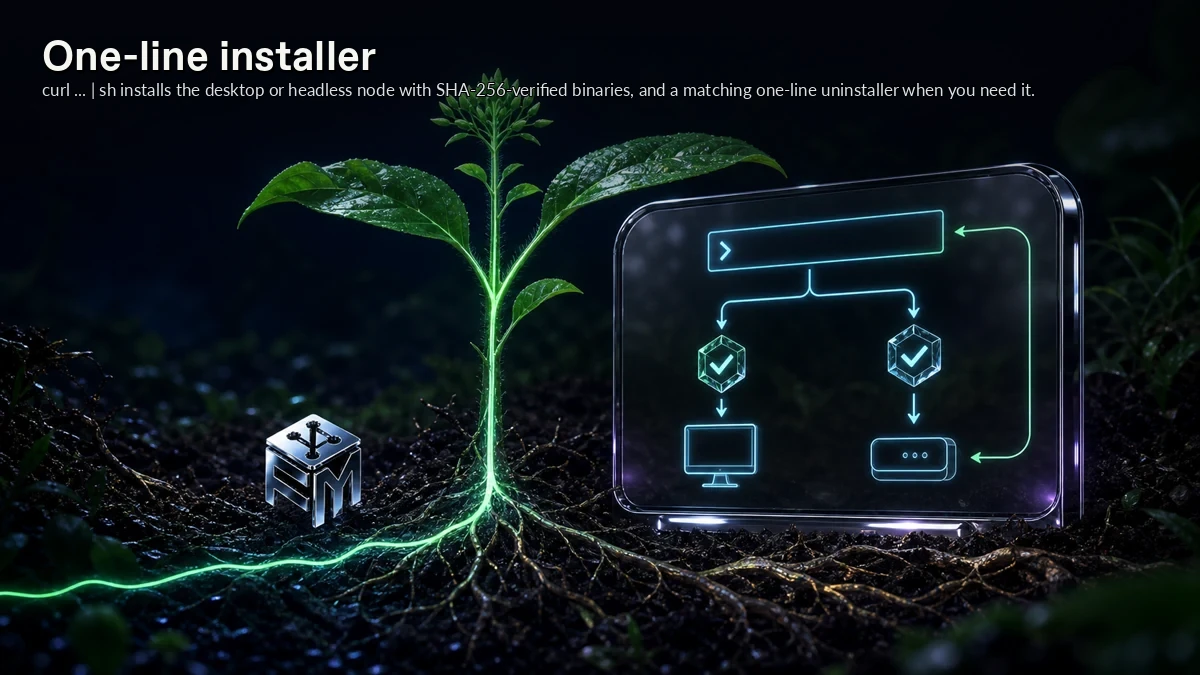
curl ... | sh installs the desktop or headless node with SHA-256-verified binaries, and a matching one-line uninstaller when you need it.
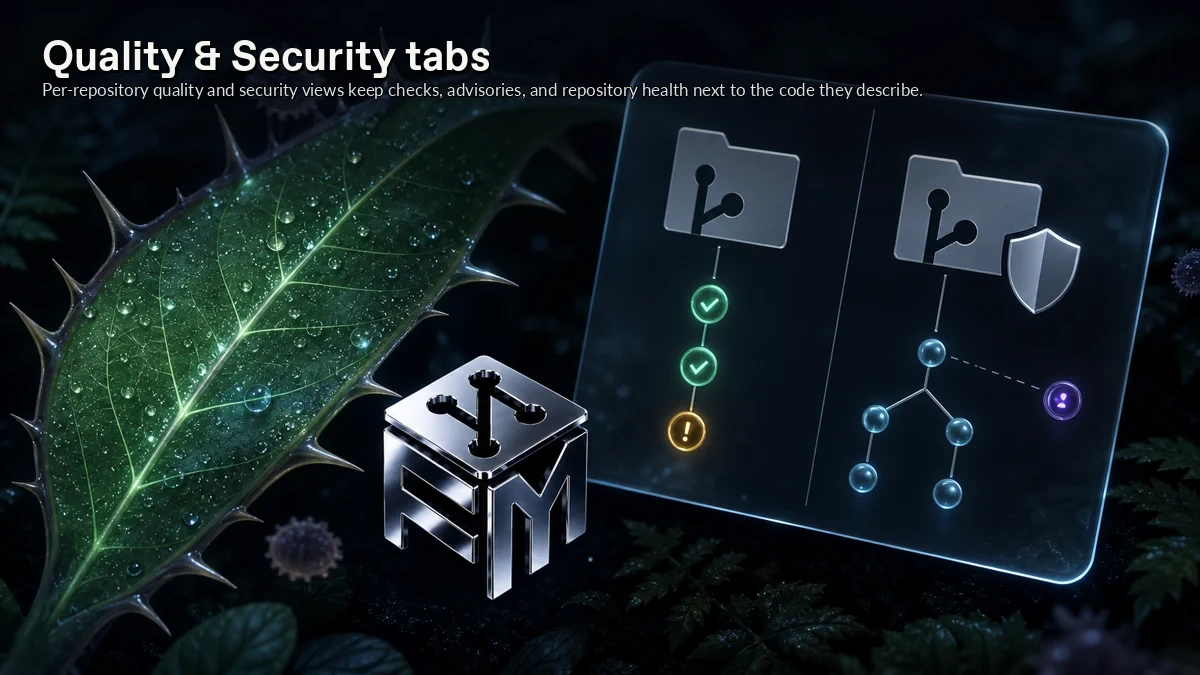
Per-repository quality and security views keep checks, advisories, and repository health next to the code they describe.
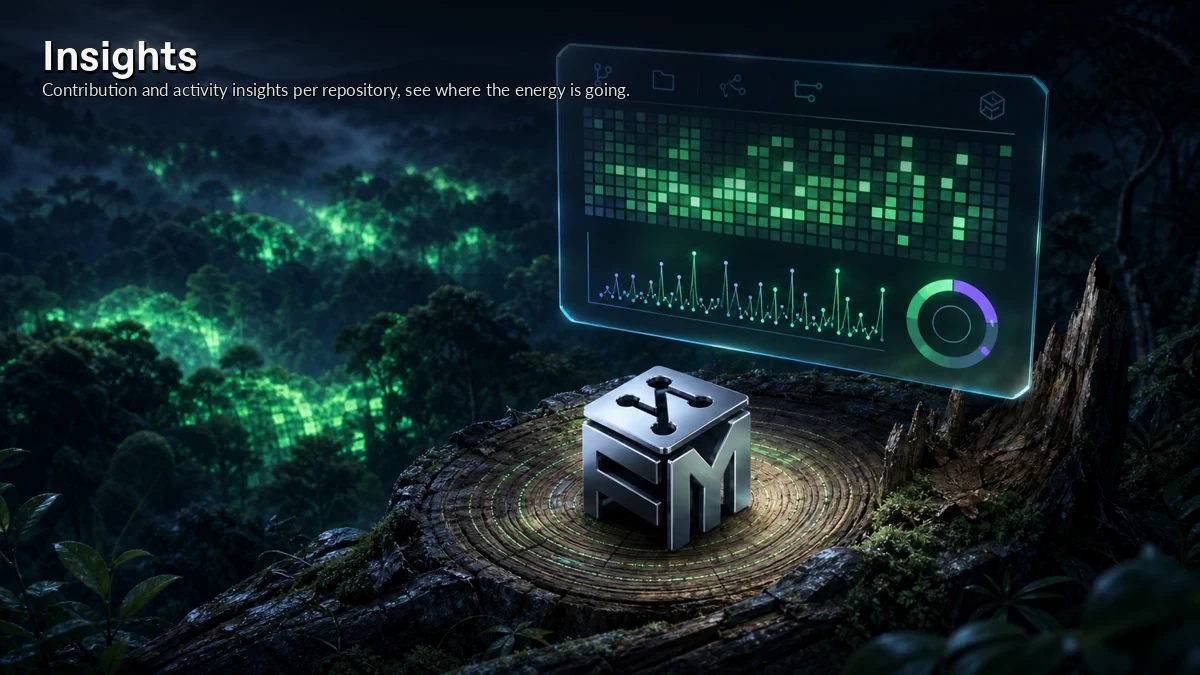
Contribution and activity insights per repository, see where the energy is going.
Chat & private sharing
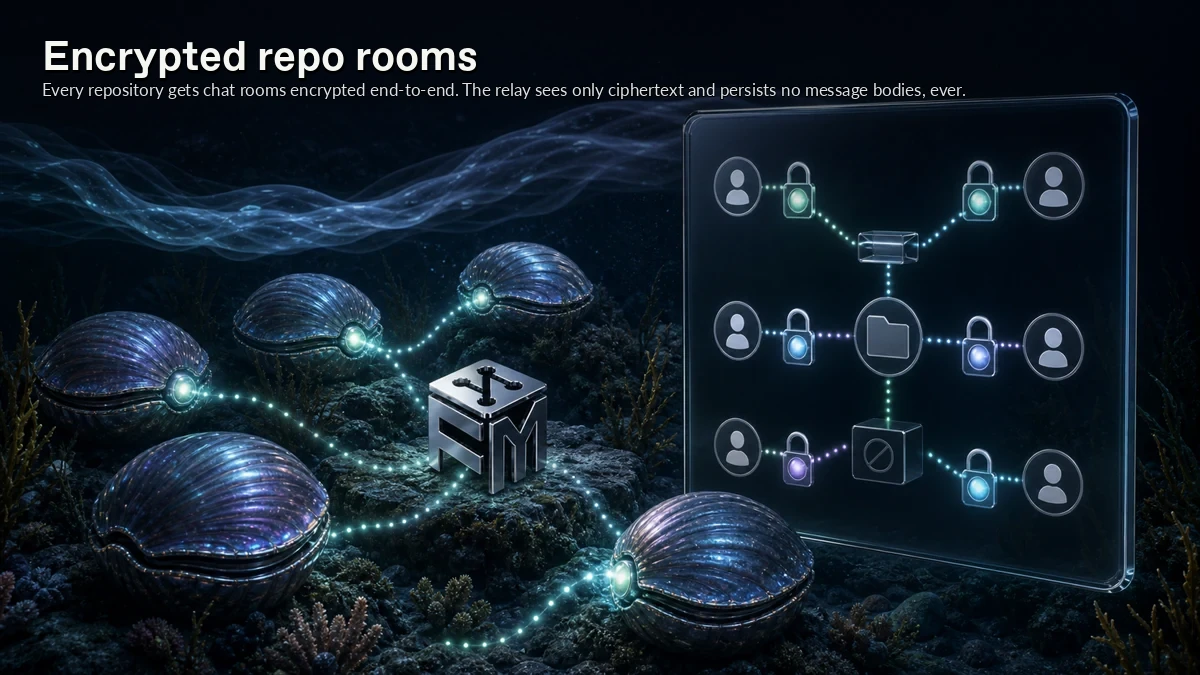
Default repository rooms use authenticated shared-key encryption. The relay derives the key and can read messages; up to 500 persisted frames remain for 7 days.
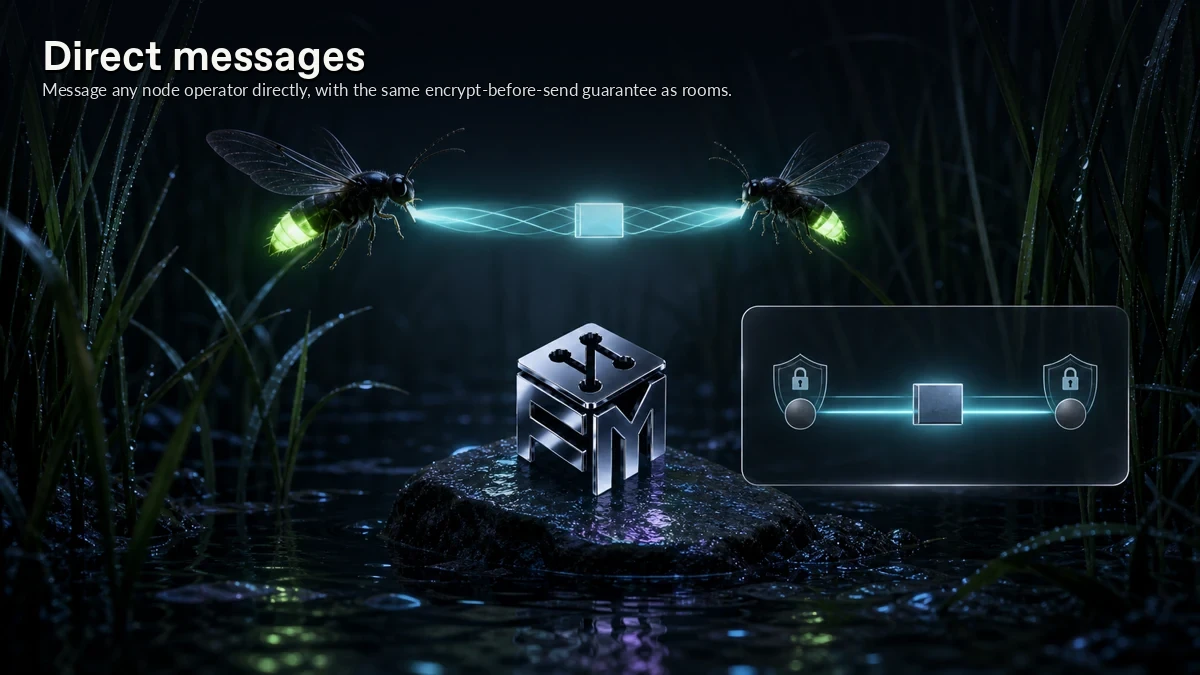
Message any node operator directly over the same relay-readable authenticated shared-key transport as rooms.
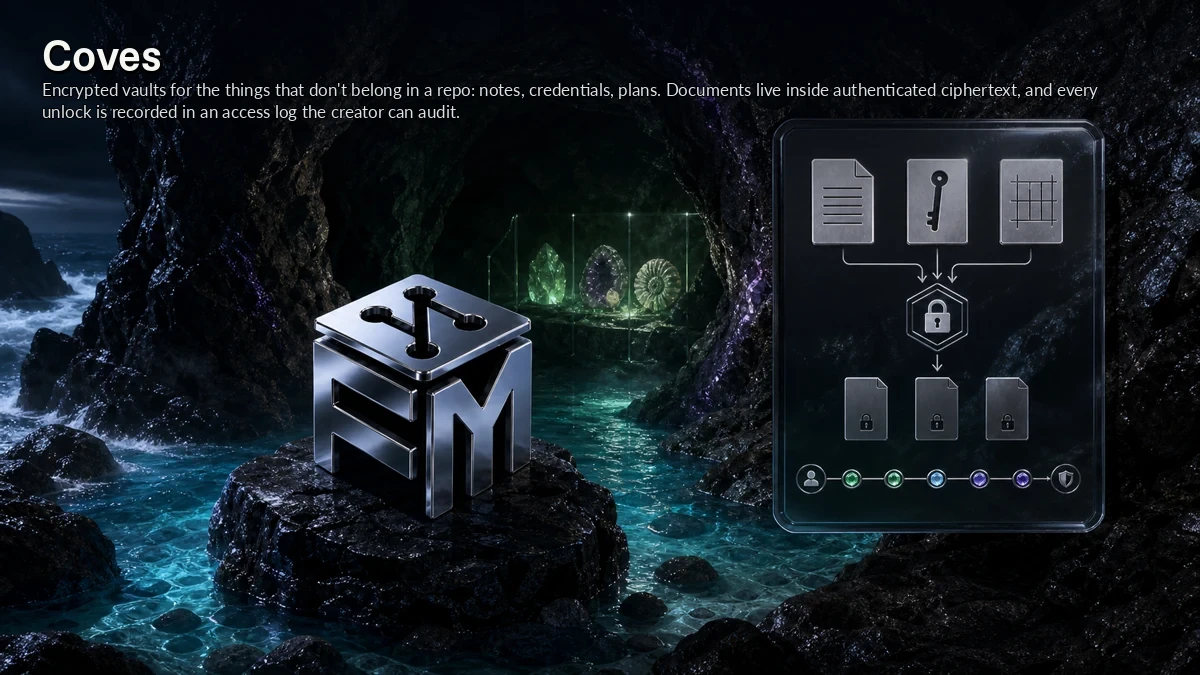
Encrypted vaults for the things that don't belong in a repo: notes, credentials, plans. Documents live inside authenticated ciphertext, and every unlock is recorded in an access log the creator can audit.
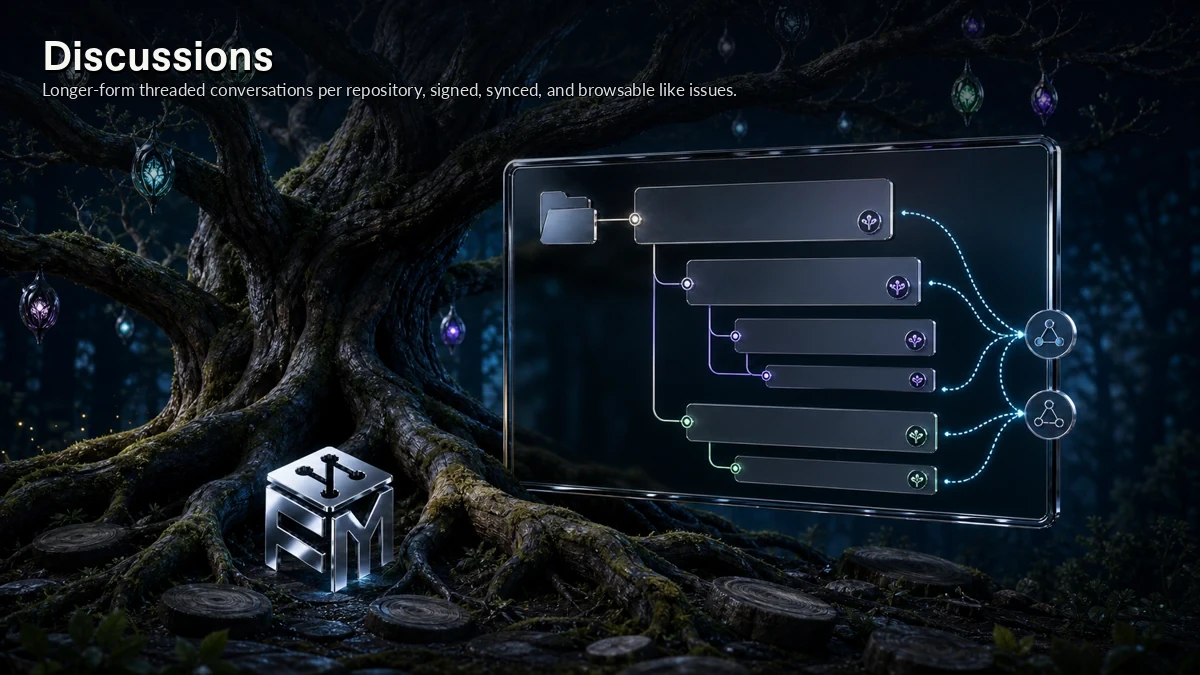
Longer-form threaded conversations per repository, signed, synced, and browsable like issues.
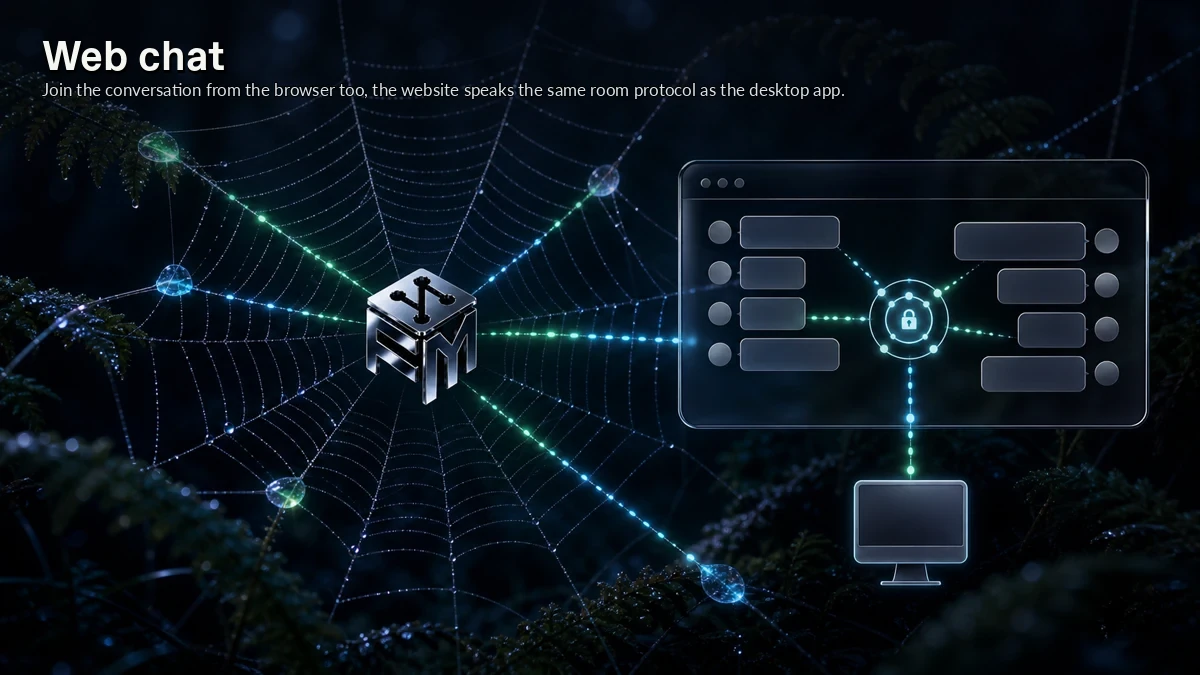
Join the conversation from the browser too, the website speaks the same room protocol as the desktop app.
Desktop app
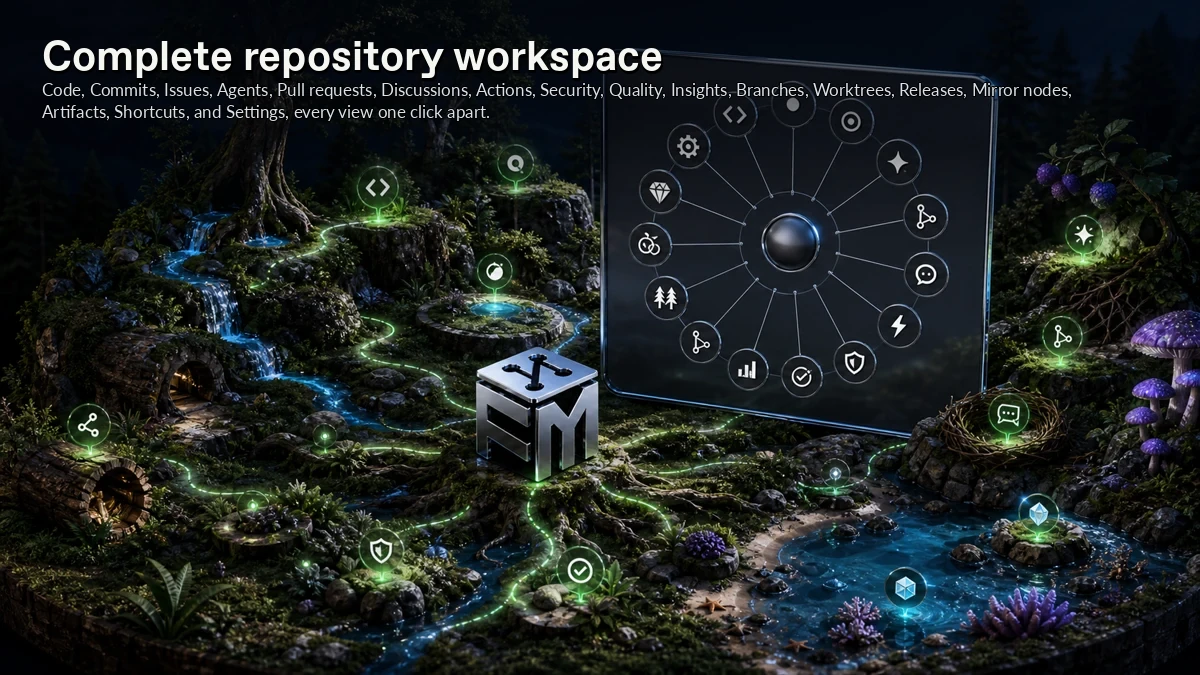
Code, Commits, Issues, Agents, Pull requests, Discussions, Actions, Security, Quality, Insights, Branches, Worktrees, Releases, Mirror nodes, Artifacts, Shortcuts, and Settings, every view one click apart.
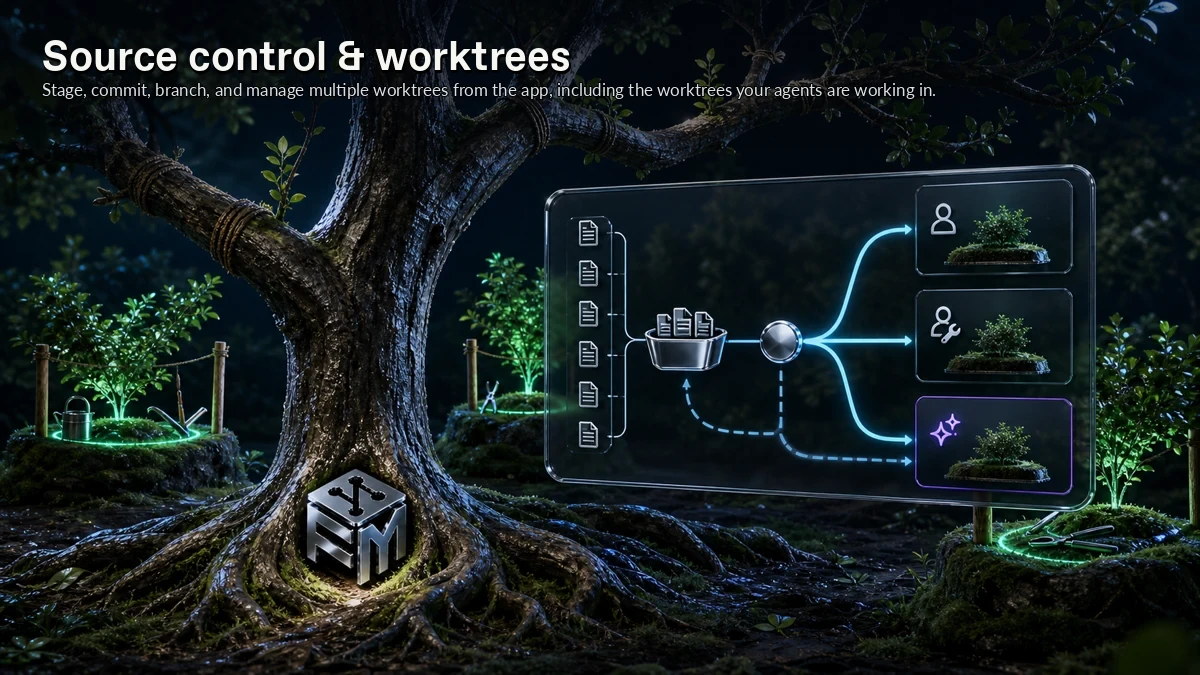
Stage, commit, branch, and manage multiple worktrees from the app, including the worktrees your agents are working in.
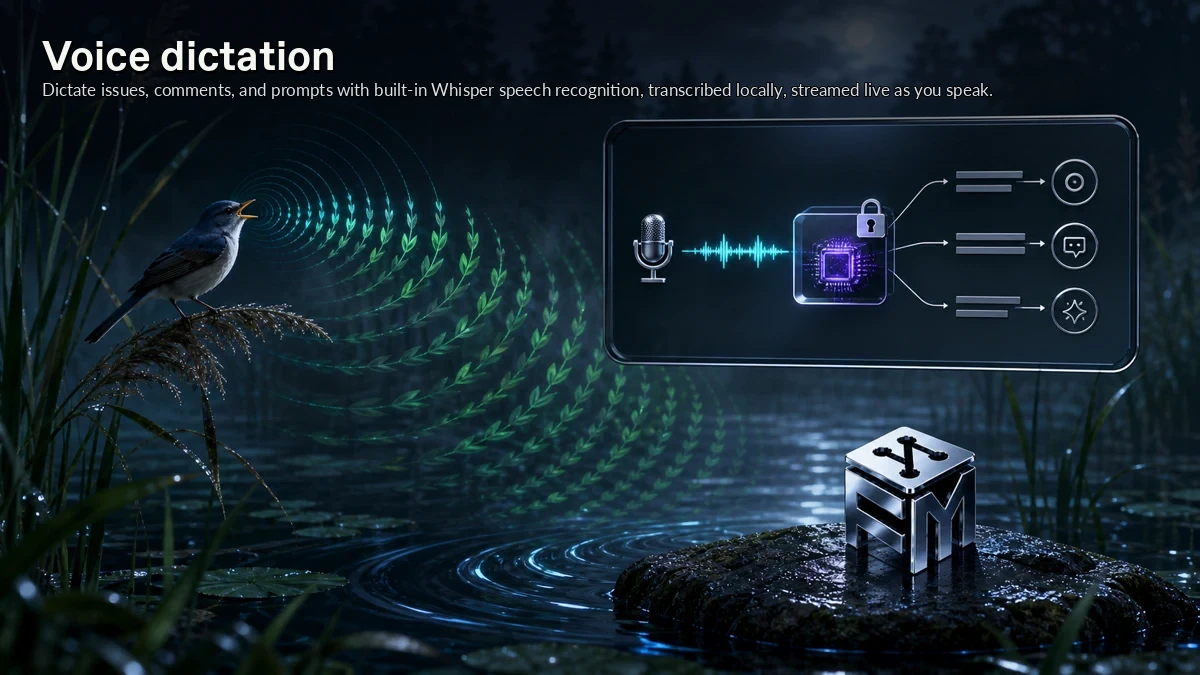
Dictate issues, comments, and prompts with built-in Whisper speech recognition, transcribed locally, streamed live as you speak.
Capture any region of the screen, annotate it with built-in drawing tools, and drop it straight into an issue, PR, or chat.
A proper Markdown editor with preview for issues, PRs, discussions, and chat, plus emoji reactions and cross-references that link issues, PRs, and commits together.
Repos, invites, and addresses render as QR codes for instant scannable handoff to a phone.
Shortcuts for every major view and arrow-key navigation across tables keep your hands on the keyboard.
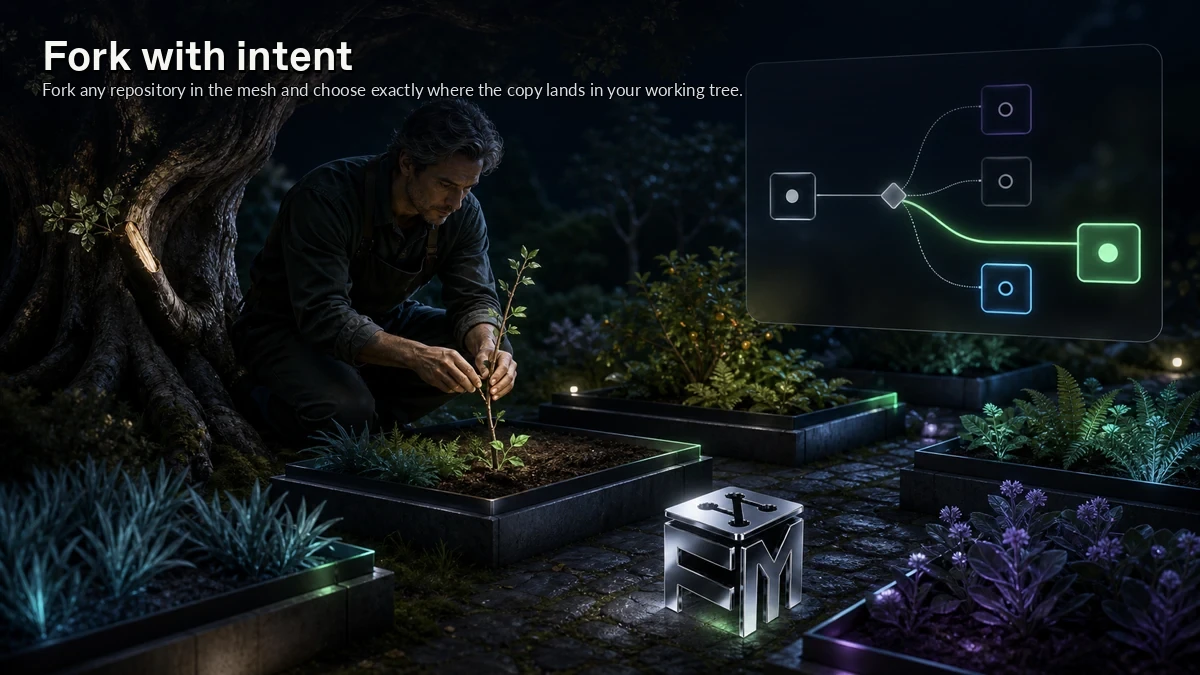
Fork any repository in the mesh and choose exactly where the copy lands in your working tree.
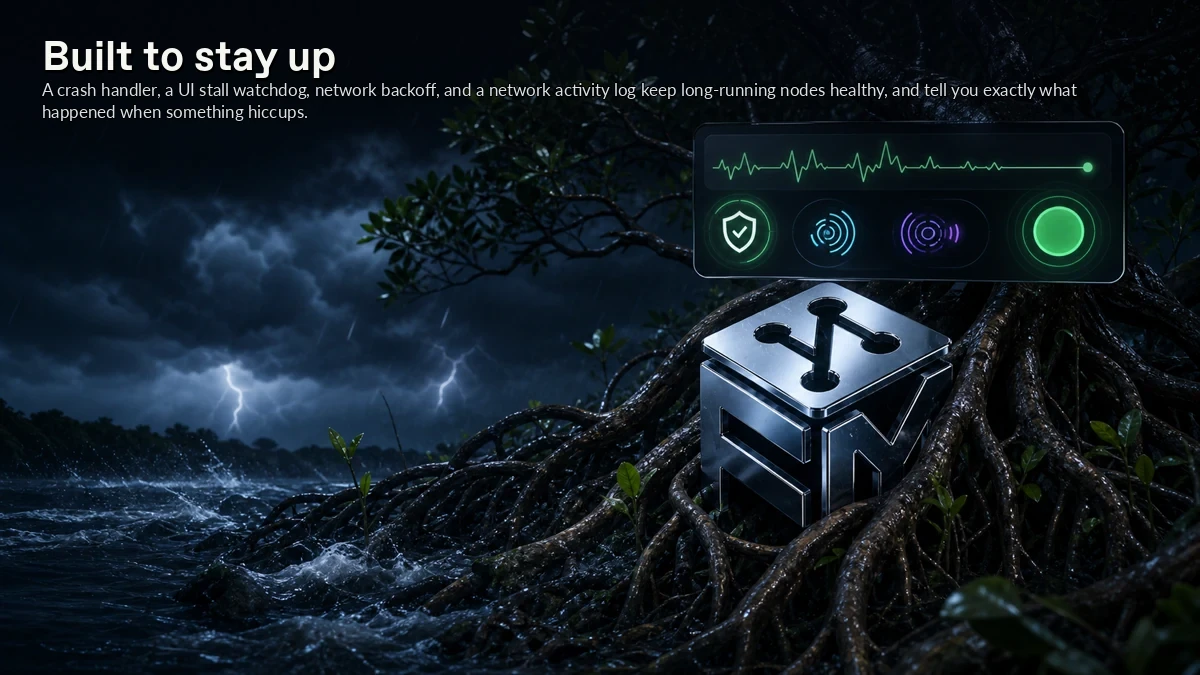
A crash handler, a UI stall watchdog, network backoff, and a network activity log keep long-running nodes healthy, and tell you exactly what happened when something hiccups.
Accounts & rewards
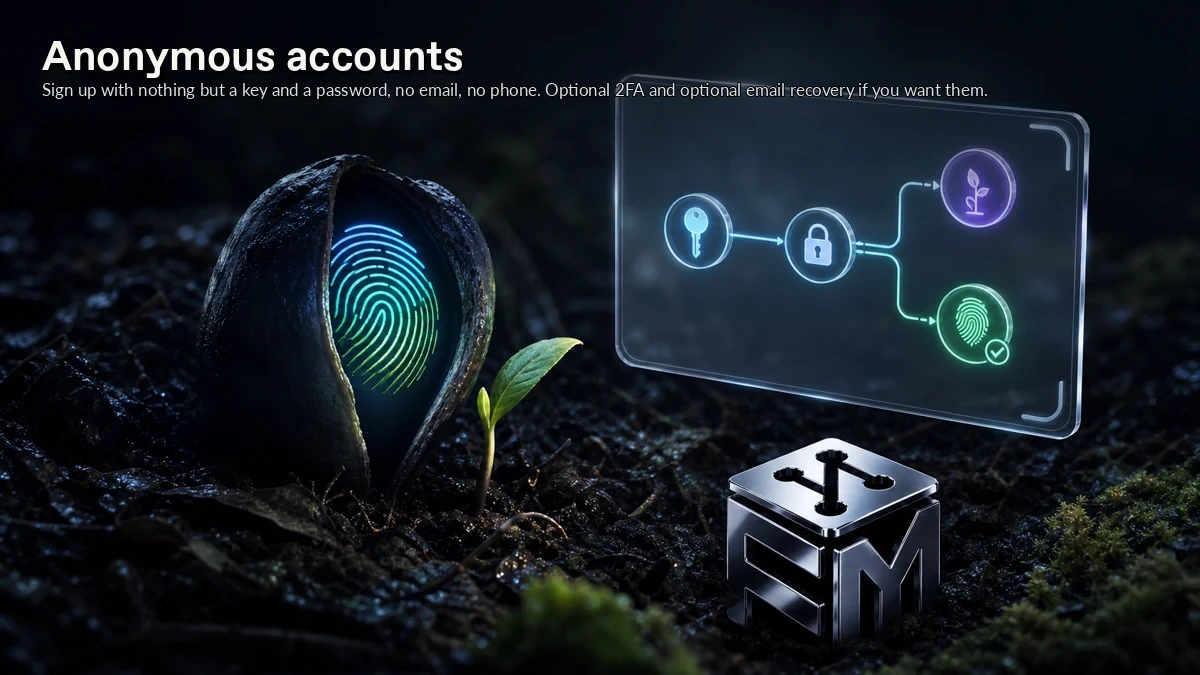
Enter the world immediately as a guest; registered accounts use email, password, and email verification.
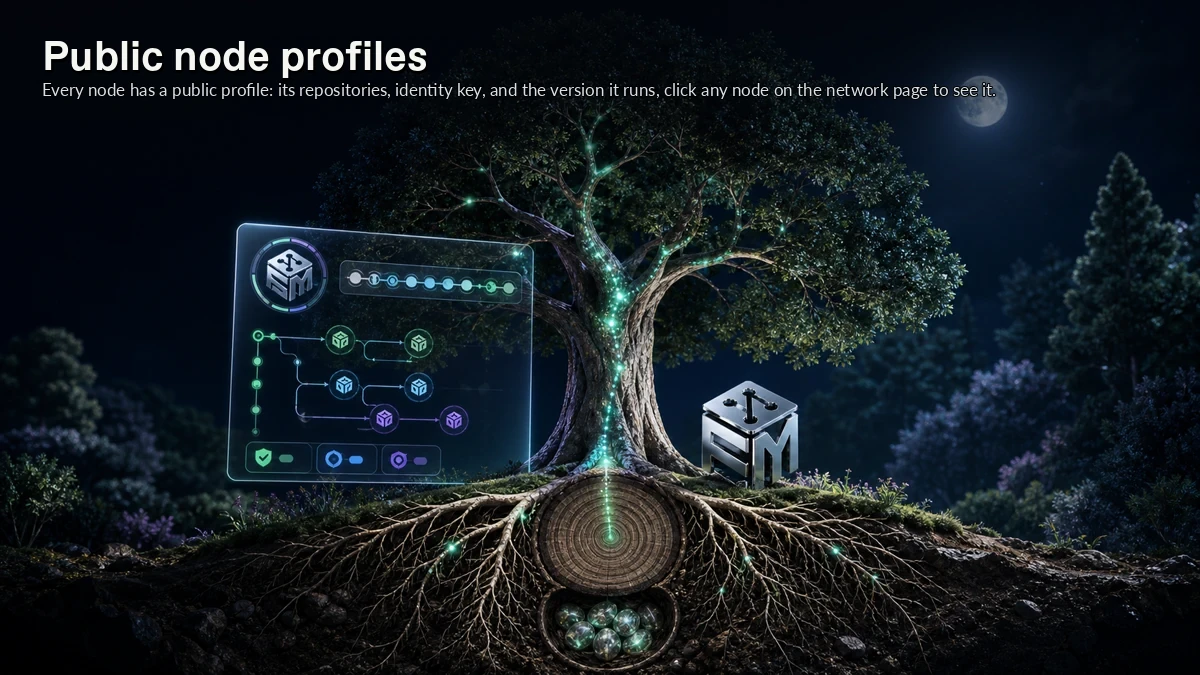
Registered nodes can publish a generalized profile, public repositories, and operator-approved status fields.
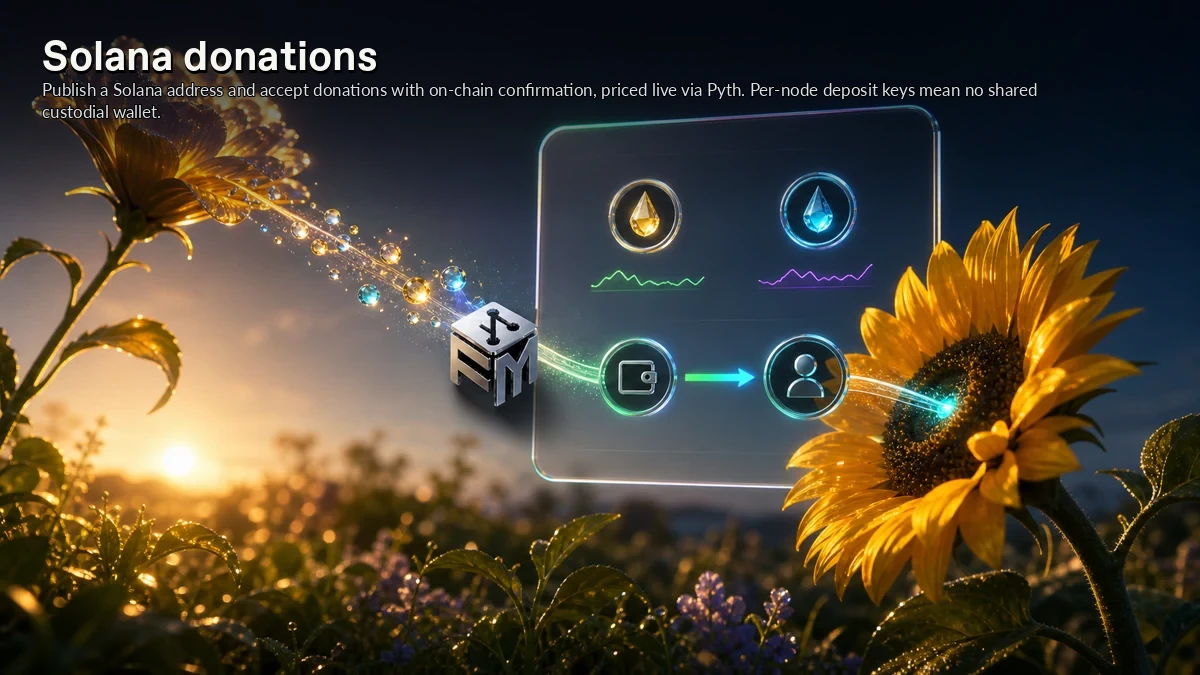
Publish a self-custodial address or contribute directly from your wallet to a transparent public reward pool. ForkMesh never stores contributors’ or recipients’ wallet private keys.
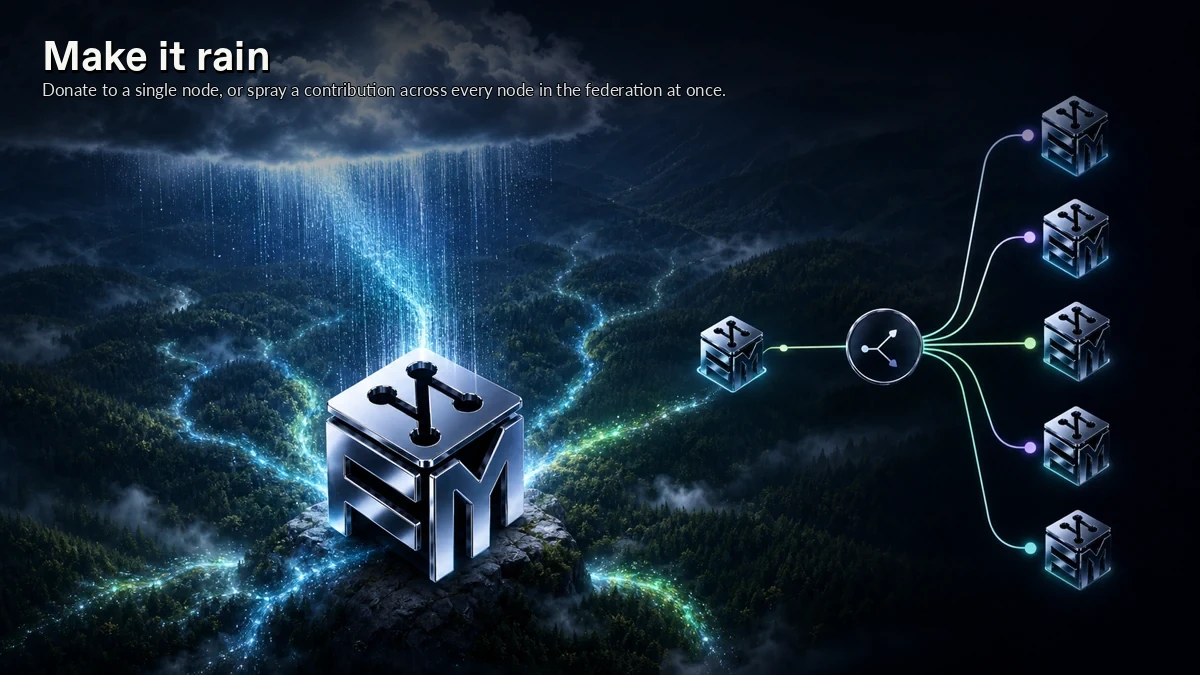
Choose an immediate all-eligible-node distribution or fund the transparent pool for later randomized community incentives.
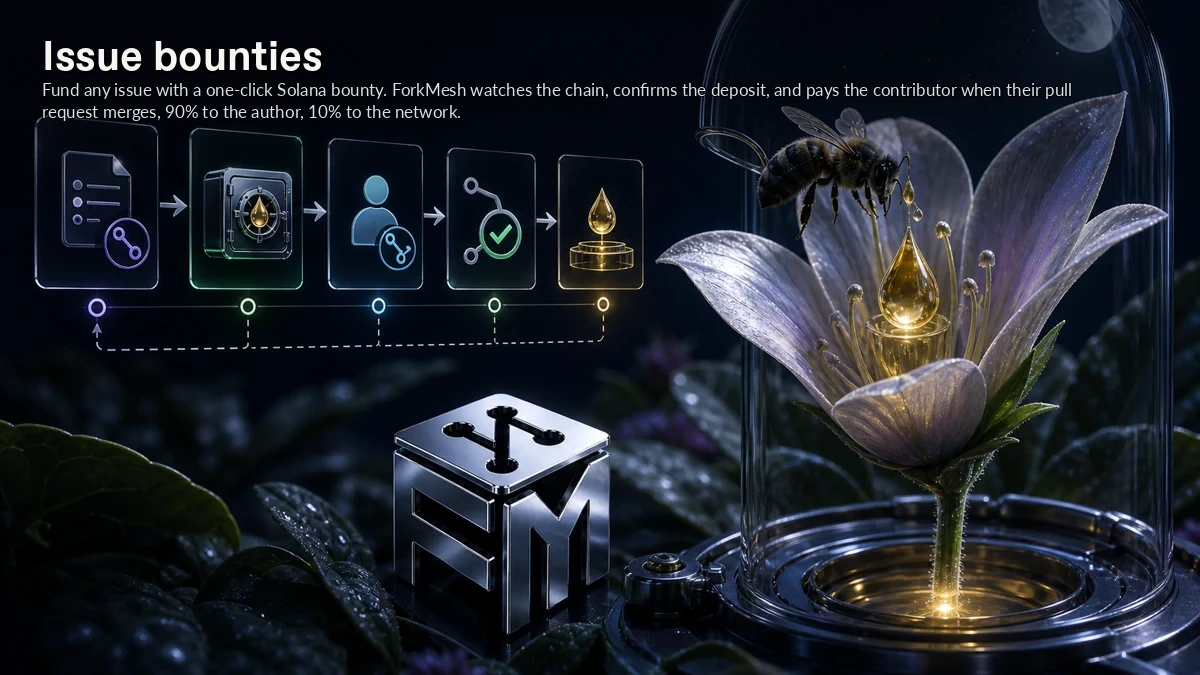
The former Worker-custodied bounty flow is frozen. Historical records require explicit offline reconciliation and migration.
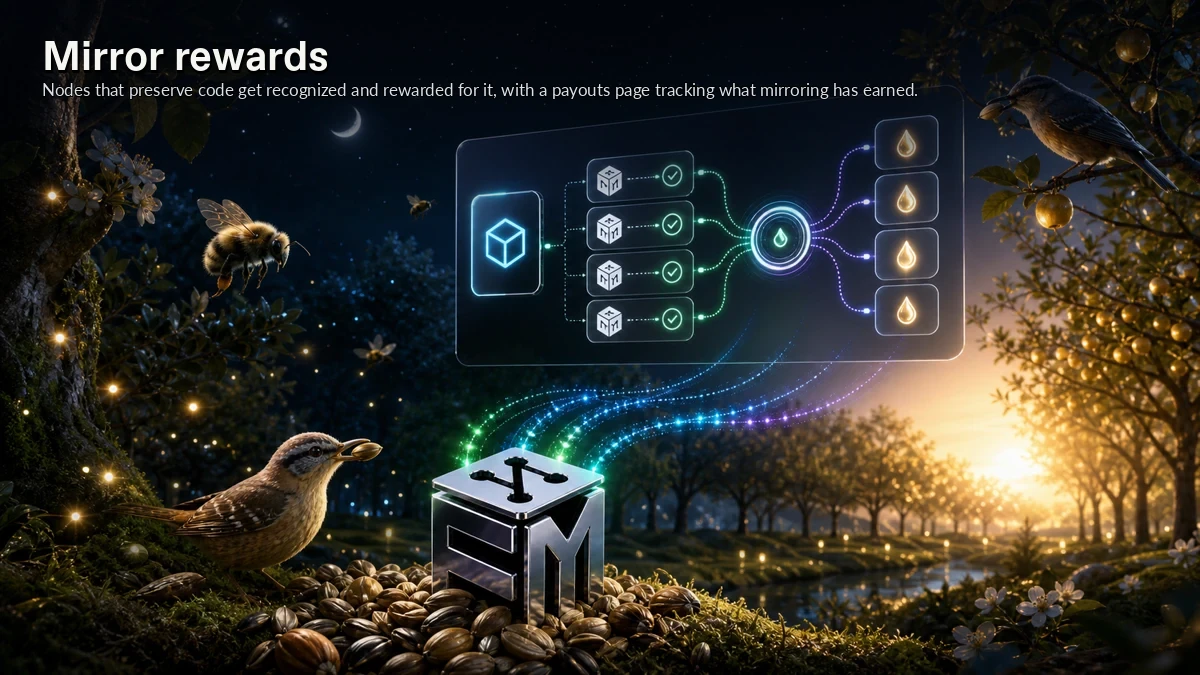
A transparent mainnet-beta community pool may reward eligible, integrity-verified mirrors through an owner-controlled local signer.
Mobile, web & IDE
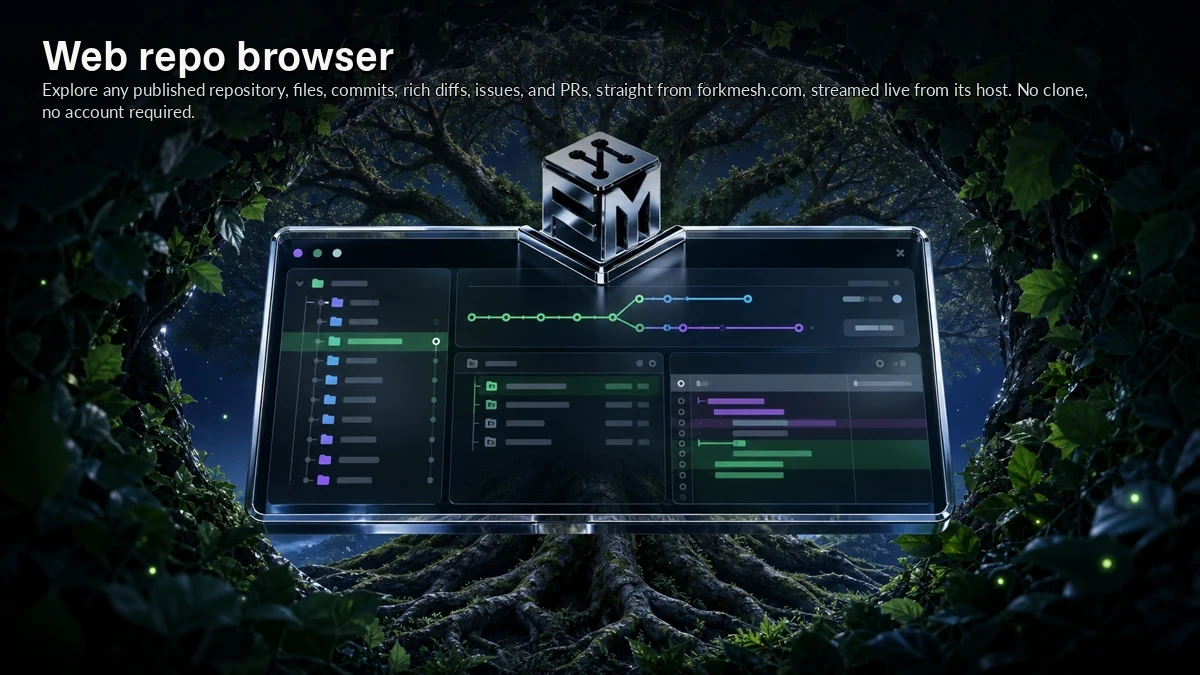
Explore public repositories at forkmesh.com while a healthy integrity-verified mirror serves repository bytes over HTTPS.
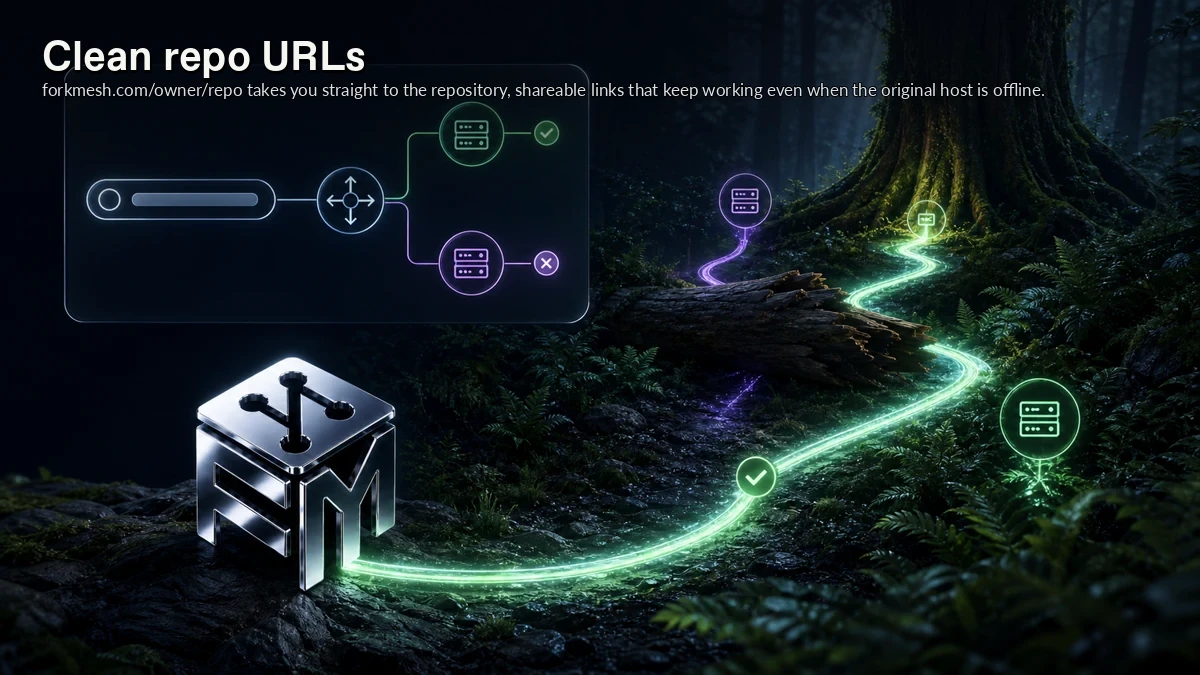
forkmesh.com/owner/repo stays the public entry point; during an origin outage it can continue through an eligible, healthy, integrity-matching mirror.
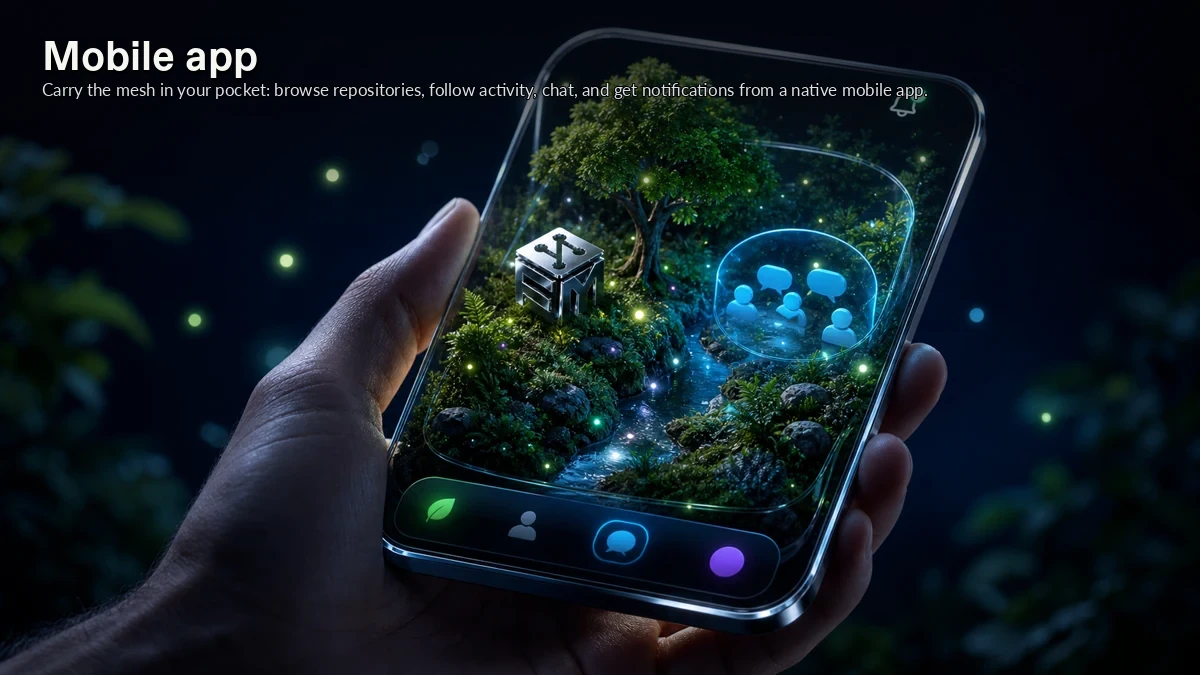
Carry the mesh in your pocket: browse repositories, follow activity, chat, and get notifications from a native mobile app.
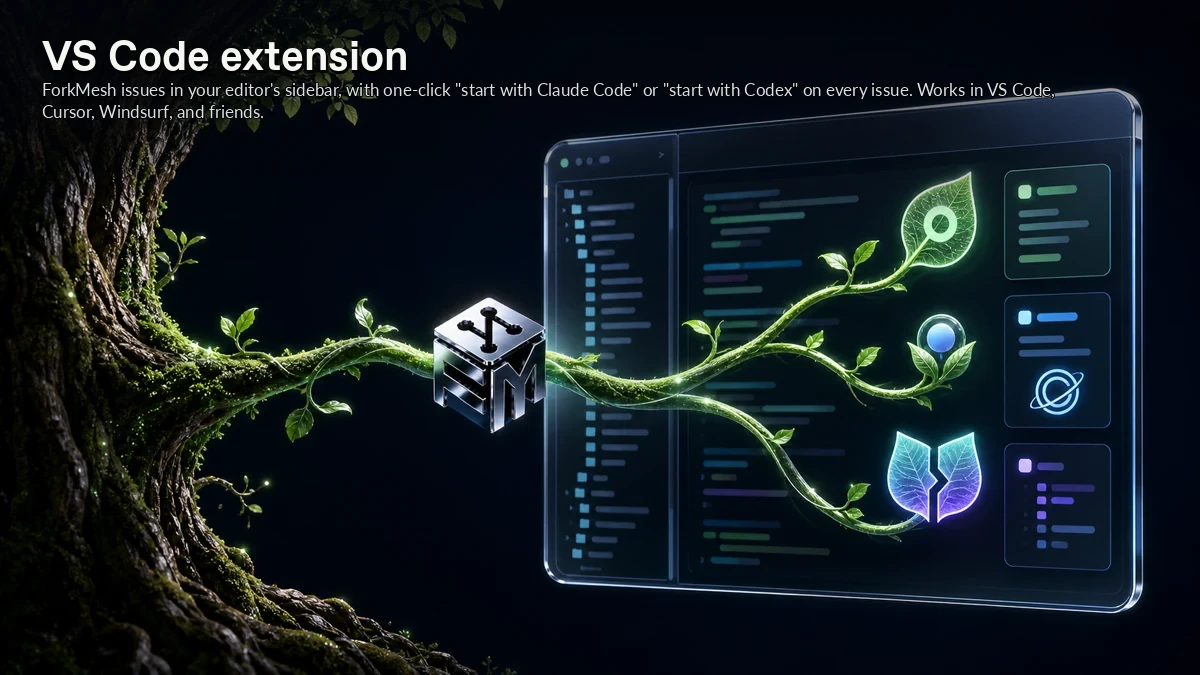
ForkMesh issues in your editor's sidebar, with one-click "start with Claude Code" or "start with Codex" on every issue. Works in VS Code, Cursor, Windsurf, and friends.
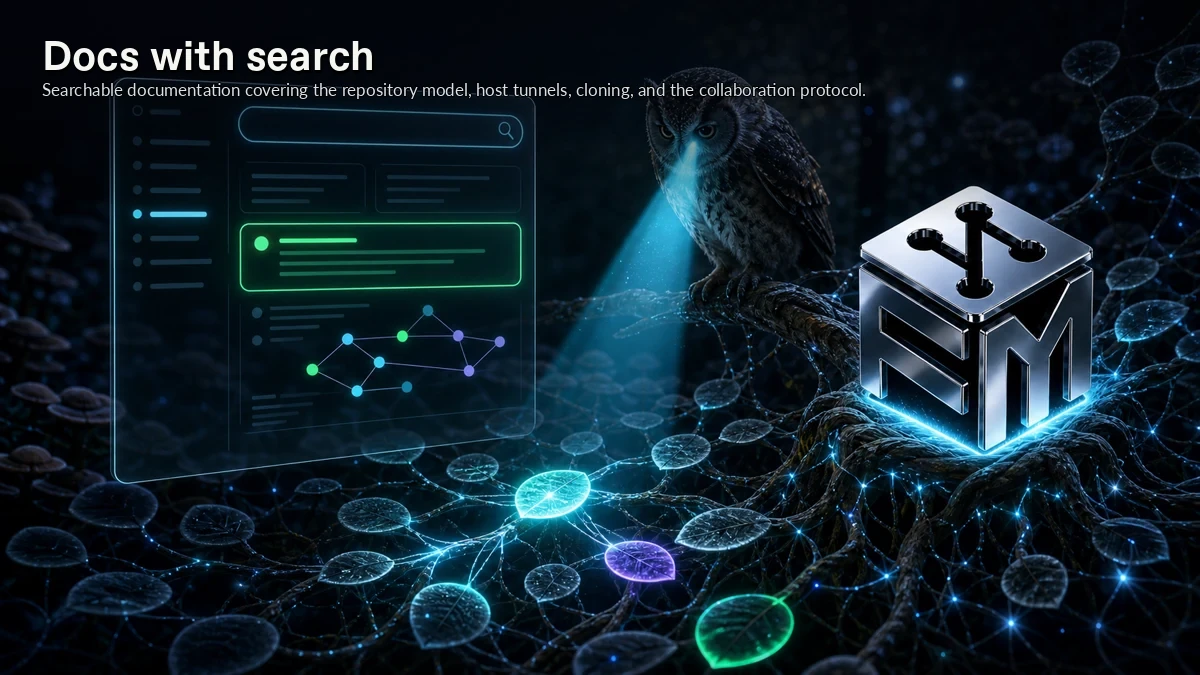
Searchable documentation covering encrypted mirrors, direct-HTTPS routing, cloning, and the collaboration protocol.
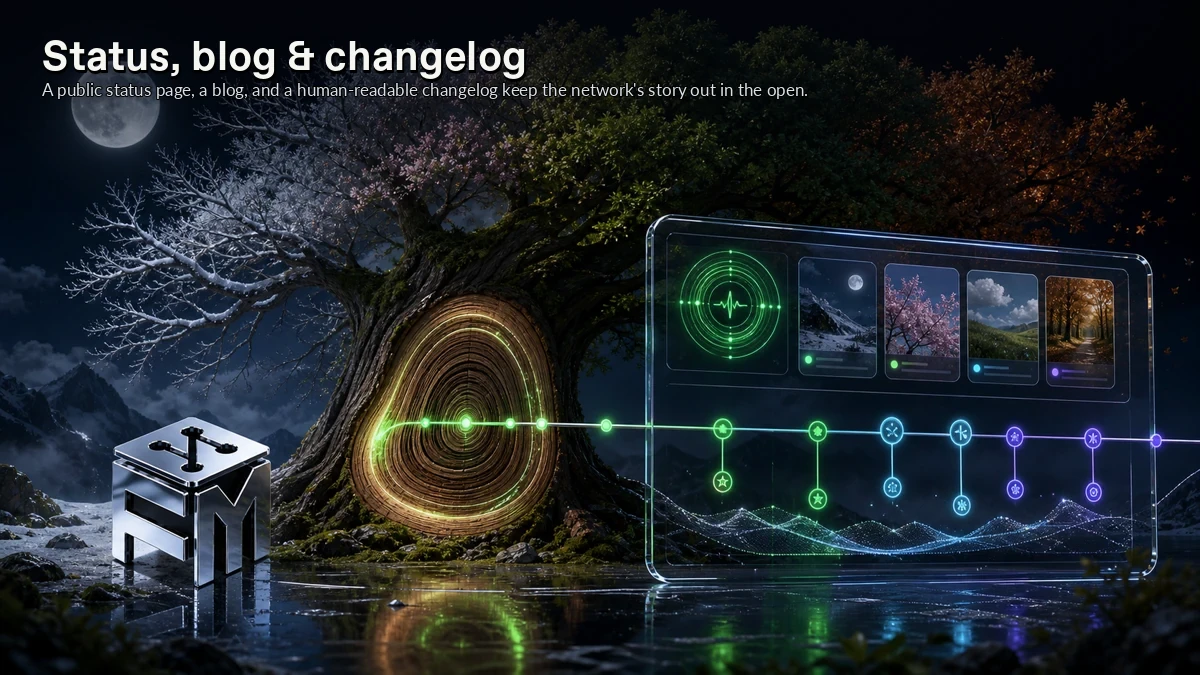
A public status page, a blog, and a human-readable changelog keep the network's story out in the open.
Archive
Independent mirrors, owner-held keys, private collaboration, and transparent community incentives.
Search
No articles found. Try mirror, signed, agents, releases, or rewards.