Why it matters
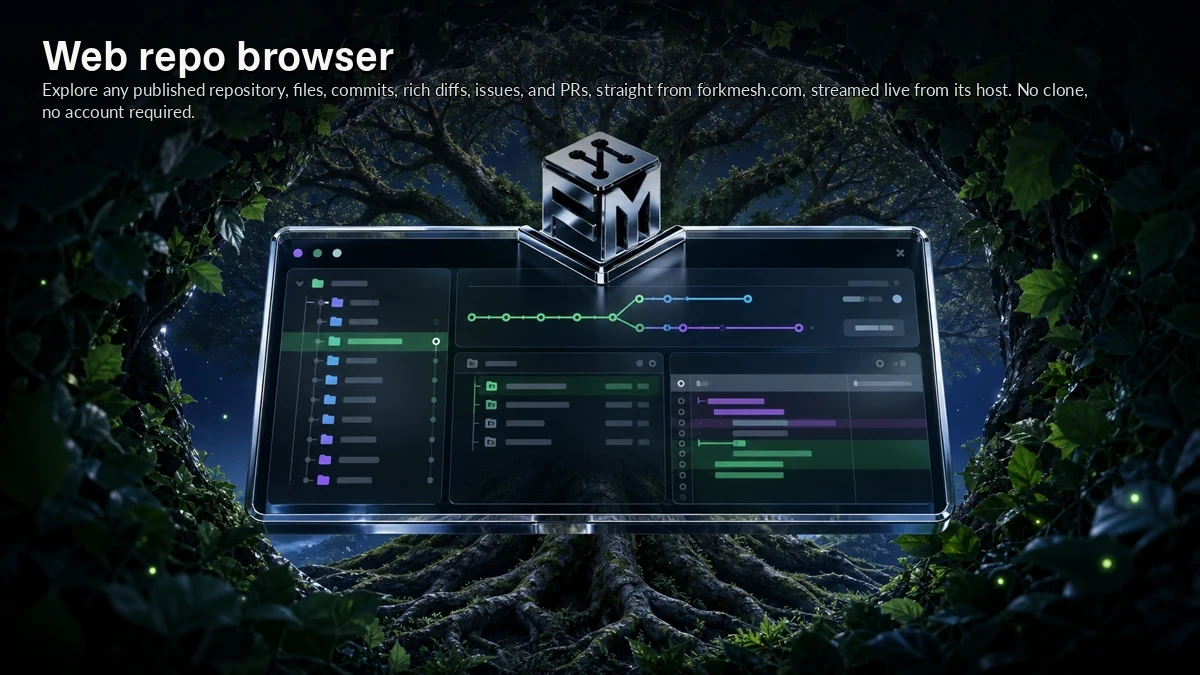
The web repository browser gives readers a stable entry point without turning the Worker into repository storage. Public files and Git data stream from a selected mirror; signed collaboration metadata is rendered alongside them.
A distributed forge still needs clean entry points for readers, contributors, mobile users, and editor workflows. In ForkMesh, web repo browser addresses that need at the feature level, keeping the behavior close to the repository instead of buried in a detached hosted layer.
How ForkMesh handles it
ForkMesh handles web repo browser through the same split it uses across the product: ForkMesh exposes web, mobile, editor, docs, status, and clean URL surfaces on top of the desktop-node and mainnode model.
The behavior is intentionally narrow: public browse and file operations use the same signed direct-HTTPS routing boundary as clone. Repository stubs say when they are not mirrored. Private repositories require an authenticated owner or collaborator and otherwise remain indistinguishable from missing repositories.
Where it fits
Use web repo browser when people need to browse, contribute, learn, and receive updates outside the main desktop window.
It pairs with the rest of Mobile, web & IDE because Web repo browser keeps live file, commit, diff, issue, and PR browsing from forkmesh.com connected to the repository, its signatures, and the nodes that serve it.